Service of notice and contractual debt acknowledgment preserved insolvency admission against a corporate guarantor despite limitation and natural just...
Original works exemption excludes standalone boulder transportation, leaving subcontracted railway-project transport services subject to service tax l...
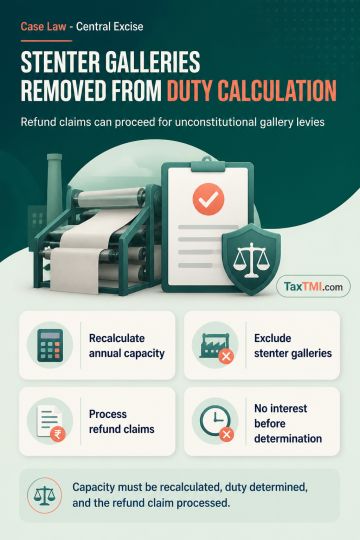
Annual production capacity determinations excluding stenter galleries support refunds for unconstitutional excise levies without an unjust-enrichment ...
Vicarious liability for cheque dishonour requires specific allegations of responsibility and cheque signatory; generic director allegations cannot sus...
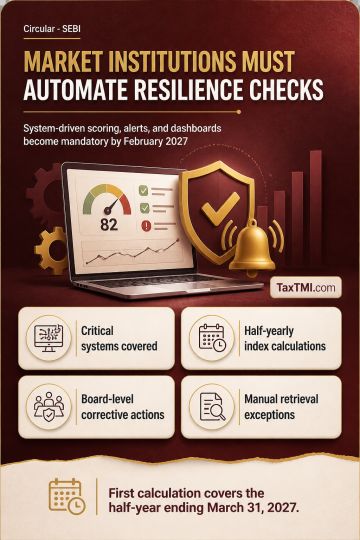
IT Resilience Index requires market infrastructure institutions to automate resilience scoring, early warnings, and continuous service-delivery monito...
In this ITAT ruling, the Tribunal held that the DCF method for share valuation was validly applied per Rule 11UA(2)(b), accepting the Chartered Accountant's certification of fair market value at Rs. 106 per share. The AO's attempts to find discrepancies in the CA's report were deemed improper as they lacked basis in acceptable principles or approved standards. The Tribunal determined that valuation can only be disputed by another legally recognized expert, thus the s.56(2)(viib) addition was erroneous. Regarding the s.68 addition, the Tribunal ruled that the proviso only permits scrutiny of immediate subscribing companies, not secondary funding sources. The s.14A disallowance was upheld as the assessee failed to rebut findings about expenditure incurred for earning dividend income.
In this ITAT ruling, the Tribunal held that the DCF method for share valuation was validly applied per Rule 11UA(2)(b), accepting the Chartered Accountant's certification of fair market value at Rs. 106 per share. The AO's attempts to find discrepancies in the CA's report were deemed improper as they lacked basis in acceptable principles or approved standards. The Tribunal determined that valuation can only be disputed by another legally recognized expert, thus the s.56(2)(viib) addition was erroneous. Regarding the s.68 addition, the Tribunal ruled that the proviso only permits scrutiny of immediate subscribing companies, not secondary funding sources. The s.14A disallowance was upheld as the assessee failed to rebut findings about expenditure incurred for earning dividend income.
Note: It is a system-generated summary and is for quick reference only.
 TaxTMI
  TaxTMI
 of 4828















 Join Channel