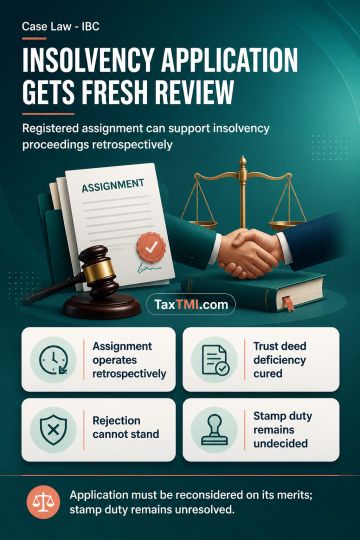
Transfer pricing and tax deductions upheld on established principles, while employee contributions and warranty provisions returned for fresh examinat...
Captive transfer pricing relies on industrial consumer tariffs, while genuine quotations can benchmark effluent treatment transfers under the Other Me...
Specific tariff classification for ophthalmic instruments and extended limitation principles determine the treatment of duty demands, confiscation, an...
Integrated golf function determines classification, placing launch monitors and simulators under other golf equipment rather than measuring instrument...
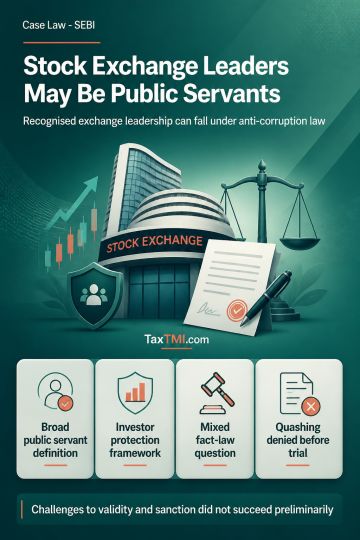
Public servant status under anti-corruption law extends to recognised stock exchange leadership; constitutional and sanction challenges do not succeed...
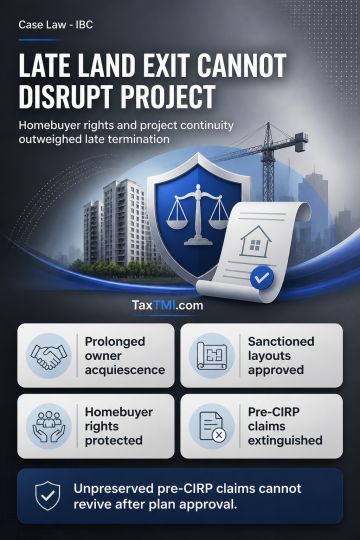
Acquiescence, homebuyer protection and clean-slate resolution principles prevent landowners from disrupting an integrated project through late termina...
The HC granted bail to the proprietor of M/s P.S. Enterprise who was accused of fraudulently availing Input Tax Credit and evading GST payments amounting to crores of rupees. After 54 days in judicial custody (against the mandatory period of 60 days), the Court determined that the primary purpose of the CGST Act is not penal but to recover amounts due to the Government Exchequer. Following precedent in Sanjay Kumar Bhuwalka v. Union of India, which established that monetary payment is the Government's right while arrest is only for statutory violations, the Court granted bail subject to specified conditions, noting that GST officials had sufficient opportunity to interrogate the petitioner.
The HC granted bail to the proprietor of M/s P.S. Enterprise who was accused of fraudulently availing Input Tax Credit and evading GST payments amounting to crores of rupees. After 54 days in judicial custody (against the mandatory period of 60 days), the Court determined that the primary purpose of the CGST Act is not penal but to recover amounts due to the Government Exchequer. Following precedent in Sanjay Kumar Bhuwalka v. Union of India, which established that monetary payment is the Government's right while arrest is only for statutory violations, the Court granted bail subject to specified conditions, noting that GST officials had sufficient opportunity to interrogate the petitioner.
Note: It is a system-generated summary and is for quick reference only.
 TaxTMI
 of 4805
















 Join Channel


 TaxTMI