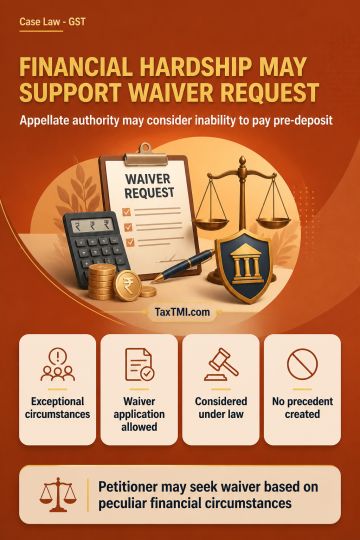
Rectification of mistake remains limited to self-evident record errors, preventing merits review through miscellaneous applications and preserving fin...
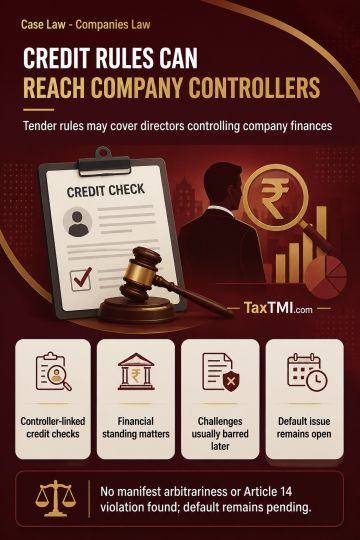
Tender creditworthiness conditions may extend to de facto Promoter Directors, with post-participation challenges generally barred absent arbitrariness...
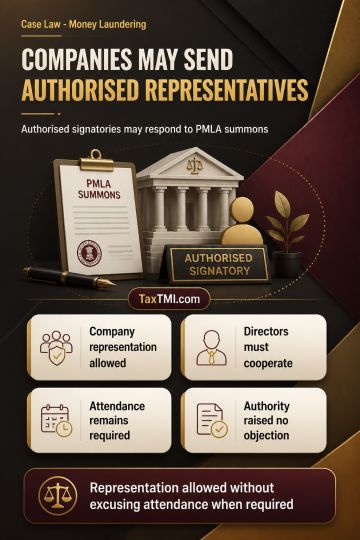
Corporate representation in PMLA summons proceedings permitted through an authorised signatory, subject to directors' continuing cooperation and atten...
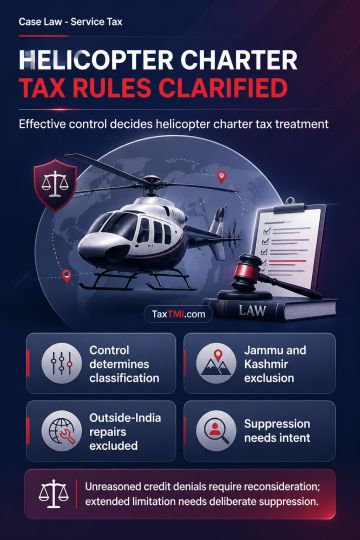
Helicopter charter classification requires effective control analysis, while territorial performance, reasoned credit orders and wilful suppression de...
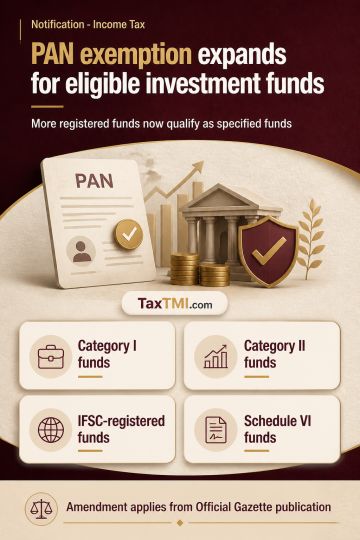
Specified fund definition expands PAN exemption eligibility for registered alternative investment funds and qualifying International Financial Service...
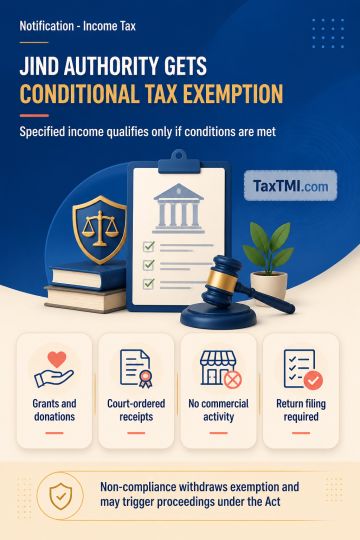
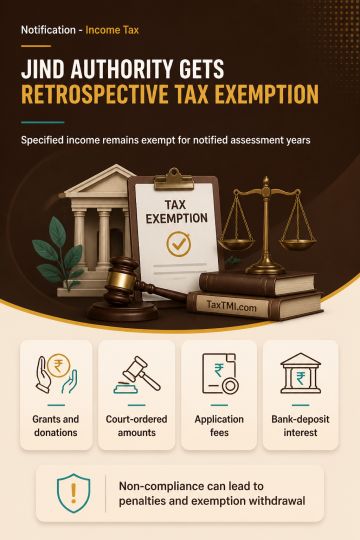
Tax exemption for specified legal-services authority income applies retrospectively, subject to non-commercial activity, unchanged income sources, and...
The HC granted bail to the proprietor of M/s P.S. Enterprise who was accused of fraudulently availing Input Tax Credit and evading GST payments amounting to crores of rupees. After 54 days in judicial custody (against the mandatory period of 60 days), the Court determined that the primary purpose of the CGST Act is not penal but to recover amounts due to the Government Exchequer. Following precedent in Sanjay Kumar Bhuwalka v. Union of India, which established that monetary payment is the Government's right while arrest is only for statutory violations, the Court granted bail subject to specified conditions, noting that GST officials had sufficient opportunity to interrogate the petitioner.
The HC granted bail to the proprietor of M/s P.S. Enterprise who was accused of fraudulently availing Input Tax Credit and evading GST payments amounting to crores of rupees. After 54 days in judicial custody (against the mandatory period of 60 days), the Court determined that the primary purpose of the CGST Act is not penal but to recover amounts due to the Government Exchequer. Following precedent in Sanjay Kumar Bhuwalka v. Union of India, which established that monetary payment is the Government's right while arrest is only for statutory violations, the Court granted bail subject to specified conditions, noting that GST officials had sufficient opportunity to interrogate the petitioner.
Note: It is a system-generated summary and is for quick reference only.
 TaxTMI
 of 4803



 Join Channel


 TaxTMI