Pharmaceutical promotion and transfer-pricing comparability principles limited disallowances, while uncorroborated search allegations and unsupported ...
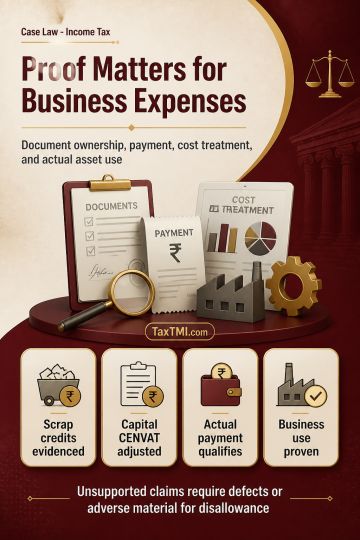
Business expenditure substantiation supports scrap credits, statutory payments and expense claims, while depreciation requires proof of actual busines...
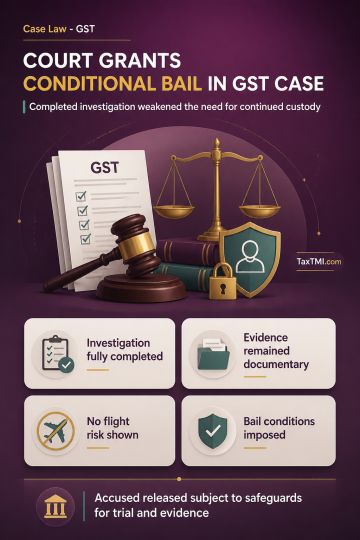
The HC granted bail to the proprietor of M/s P.S. Enterprise who was accused of fraudulently availing Input Tax Credit and evading GST payments amounting to crores of rupees. After 54 days in judicial custody (against the mandatory period of 60 days), the Court determined that the primary purpose of the CGST Act is not penal but to recover amounts due to the Government Exchequer. Following precedent in Sanjay Kumar Bhuwalka v. Union of India, which established that monetary payment is the Government's right while arrest is only for statutory violations, the Court granted bail subject to specified conditions, noting that GST officials had sufficient opportunity to interrogate the petitioner.
The HC granted bail to the proprietor of M/s P.S. Enterprise who was accused of fraudulently availing Input Tax Credit and evading GST payments amounting to crores of rupees. After 54 days in judicial custody (against the mandatory period of 60 days), the Court determined that the primary purpose of the CGST Act is not penal but to recover amounts due to the Government Exchequer. Following precedent in Sanjay Kumar Bhuwalka v. Union of India, which established that monetary payment is the Government's right while arrest is only for statutory violations, the Court granted bail subject to specified conditions, noting that GST officials had sufficient opportunity to interrogate the petitioner.
Note: It is a system-generated summary and is for quick reference only.
 TaxTMI
 of 4801








 Join Channel


 TaxTMI
