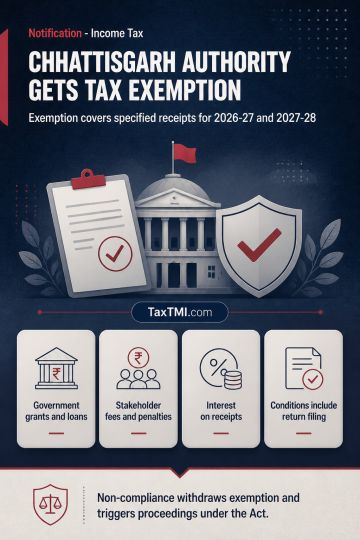
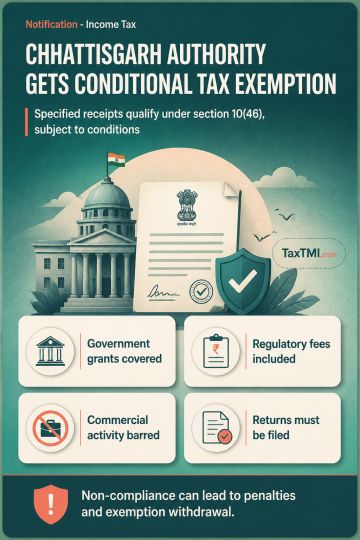
Specified regulatory authority income receives conditional tax exemption, subject to non-commercial activity, unchanged income character, and return f...
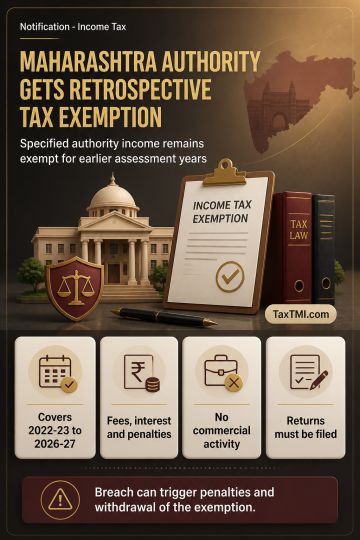
Tax exemption for regulatory authority income applies retrospectively, subject to non-commercial activity, unchanged income sources, and return-filing...
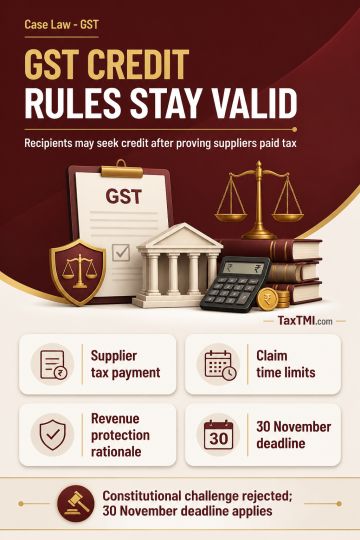
Input tax credit conditions remain constitutionally valid, with eligible recipient claims considered under GST circulars and retrospective filing dead...
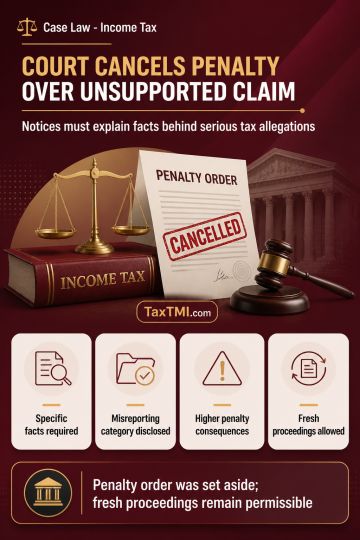
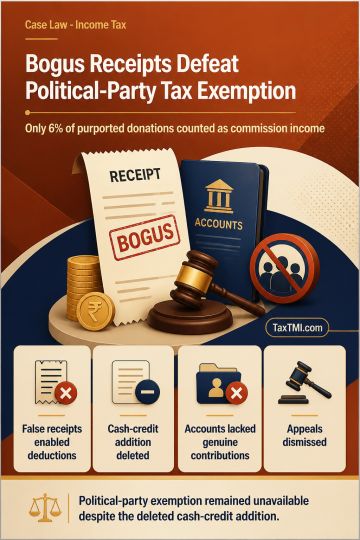
Bogus donation receipts justified commission income assessment and defeated political-party tax exemption for inaccurate accounts and reporting failur...
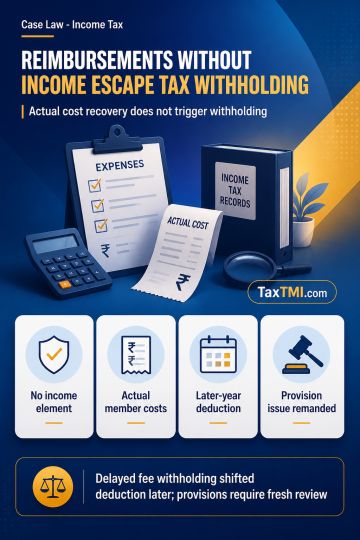
Pure reimbursement without income element escapes tax withholding, while delayed withholding and unsupported provisions face deferred or renewed scrut...
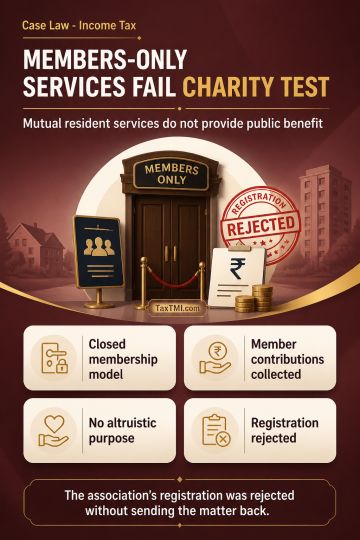
Public benefit requirement defeats charitable registration where residents' association services are reciprocal, member-only facilities governed by mu...
The HC granted bail to the proprietor of M/s P.S. Enterprise who was accused of fraudulently availing Input Tax Credit and evading GST payments amounting to crores of rupees. After 54 days in judicial custody (against the mandatory period of 60 days), the Court determined that the primary purpose of the CGST Act is not penal but to recover amounts due to the Government Exchequer. Following precedent in Sanjay Kumar Bhuwalka v. Union of India, which established that monetary payment is the Government's right while arrest is only for statutory violations, the Court granted bail subject to specified conditions, noting that GST officials had sufficient opportunity to interrogate the petitioner.
The HC granted bail to the proprietor of M/s P.S. Enterprise who was accused of fraudulently availing Input Tax Credit and evading GST payments amounting to crores of rupees. After 54 days in judicial custody (against the mandatory period of 60 days), the Court determined that the primary purpose of the CGST Act is not penal but to recover amounts due to the Government Exchequer. Following precedent in Sanjay Kumar Bhuwalka v. Union of India, which established that monetary payment is the Government's right while arrest is only for statutory violations, the Court granted bail subject to specified conditions, noting that GST officials had sufficient opportunity to interrogate the petitioner.
Note: It is a system-generated summary and is for quick reference only.
 TaxTMI
 of 4801



 Join Channel


 TaxTMI
