CENVAT credit for trading requires reversal, while taxable-service rental credit remains proportionately available and limitation issues await resolut...
Vicarious liability for dishonoured company cheques may extend to non-signatory directors where complaints contain foundational responsibility avermen...
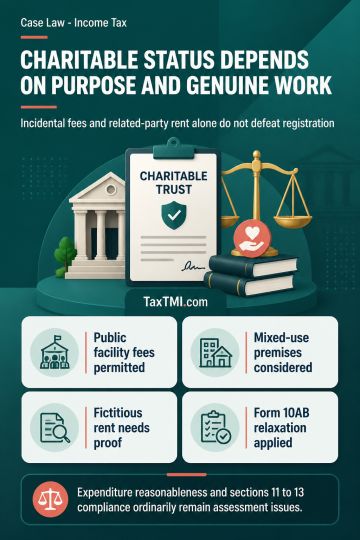
Charitable registration turns on predominant purpose and genuine activities, while incidental fees and related-party rent require supporting adverse m...
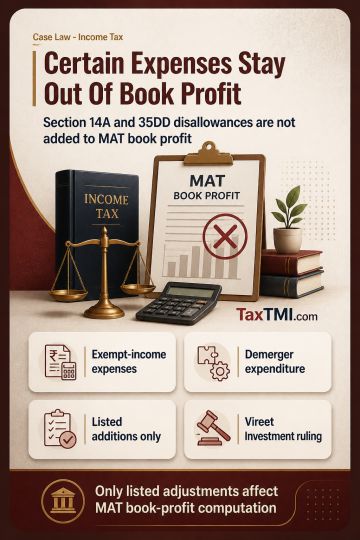
MAT book-profit adjustments exclude disallowances for exempt-income expenditure and demerger expenditure unless expressly listed under the statutory c...
Page of 4790
Press 'Enter' after typing page number.
41 to 60 of 95794 Results
❮
❯
❯❯
0 / 200
Expand Note
Add to Folder
No Folders have been created
+
Are you sure you want to delete "My most important" ?
The HC granted bail to the proprietor of M/s P.S. Enterprise who was accused of fraudulently availing Input Tax Credit and evading GST payments amounting to crores of rupees. After 54 days in judicial custody (against the mandatory period of 60 days), the Court determined that the primary purpose of the CGST Act is not penal but to recover amounts due to the Government Exchequer. Following precedent in Sanjay Kumar Bhuwalka v. Union of India, which established that monetary payment is the Government's right while arrest is only for statutory violations, the Court granted bail subject to specified conditions, noting that GST officials had sufficient opportunity to interrogate the petitioner.
The HC granted bail to the proprietor of M/s P.S. Enterprise who was accused of fraudulently availing Input Tax Credit and evading GST payments amounting to crores of rupees. After 54 days in judicial custody (against the mandatory period of 60 days), the Court determined that the primary purpose of the CGST Act is not penal but to recover amounts due to the Government Exchequer. Following precedent in Sanjay Kumar Bhuwalka v. Union of India, which established that monetary payment is the Government's right while arrest is only for statutory violations, the Court granted bail subject to specified conditions, noting that GST officials had sufficient opportunity to interrogate the petitioner.
Note: It is a system-generated summary and is for quick reference only.
 TaxTMI
 of 4790





 Join Channel


 TaxTMI