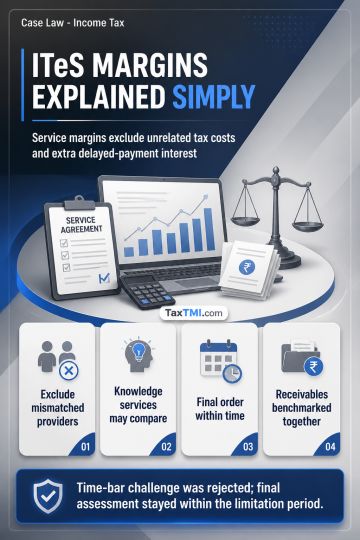
Transfer-pricing treatment of ITeS margins excludes pass-through tax recoveries and separate delayed-receivables interest after working-capital adjust...
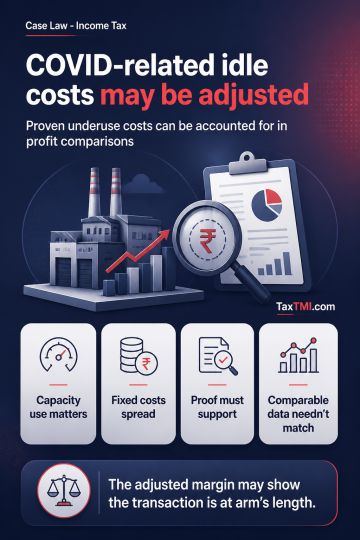
Capacity-utilisation adjustments under TNMM can neutralise substantiated COVID-related idle costs where underutilisation materially affects profitabil...
TNMM functional comparability requires excluding rice manufacturers from a pure Basmati rice trader's benchmark and recognising operating export recei...
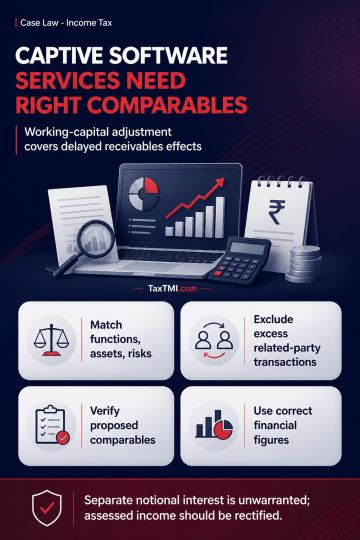
Working-capital adjustment subsumes delayed-receivable effects in TNMM benchmarking of captive software-development services, avoiding separate notion...
Transfer-pricing comparability requires exclusion of financially illogical super-profit comparables and correction of unsupported annual-report and ma...
Charitable character assessment preserves Section 80G approval despite inclusive spiritual teachings and incidental religious expenditure within the s...
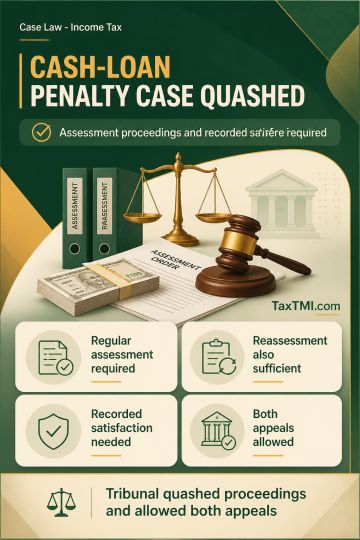
Penalty proceedings for cash-loan acceptance require assessment proceedings and recorded Assessing Officer satisfaction; absent these, the proceedings...
Page of 4828
Press 'Enter' after typing page number.
161 to 180 of 96556 Results
❮
❯
❯❯
0 / 200
Expand Note
Add to Folder
No Folders have been created
+
Are you sure you want to delete "My most important" ?
The ITAT reversed additions made by the AO under Section 69C based on entries in a seized diary, finding that the assessee had discharged the primary onus by denying the contents, while Revenue failed to conduct independent inquiries or produce corroborative evidence. The Tribunal held that additions based solely on diary entries without supporting evidence would be contrary to judicial precedent, noting that the presumption under Sections 132(4A) and 292C is rebuttable. The ITAT applied the principle that the burden of proof lies on the person making allegations, and an assessee cannot be required to prove a negative. Similarly, unexplained investment allegations for plot purchase were rejected due to lack of documentary evidence. The assessee's appeals were allowed.
The ITAT reversed additions made by the AO under Section 69C based on entries in a seized diary, finding that the assessee had discharged the primary onus by denying the contents, while Revenue failed to conduct independent inquiries or produce corroborative evidence. The Tribunal held that additions based solely on diary entries without supporting evidence would be contrary to judicial precedent, noting that the presumption under Sections 132(4A) and 292C is rebuttable. The ITAT applied the principle that the burden of proof lies on the person making allegations, and an assessee cannot be required to prove a negative. Similarly, unexplained investment allegations for plot purchase were rejected due to lack of documentary evidence. The assessee's appeals were allowed.
Note: It is a system-generated summary and is for quick reference only.
 TaxTMI
  TaxTMI
 of 4828










 Join Channel