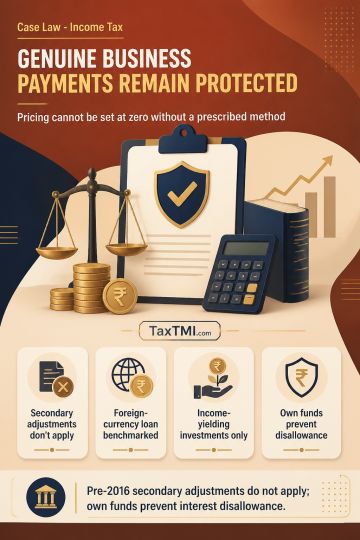
Transfer-pricing methodology protects commercially genuine associated-enterprise payments, while pre-2016 secondary adjustments and related notional i...
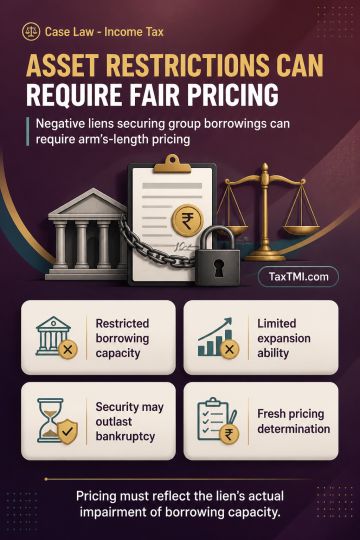
Negative liens over operating assets can constitute international transactions requiring arm's-length pricing reflecting restricted borrowing and expa...
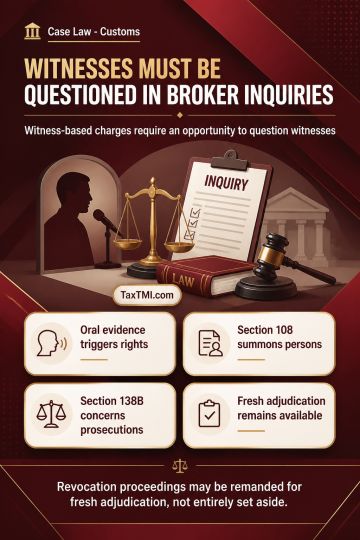
Cross-examination rights in Customs Broker revocation inquiries require witness examination; procedural denial may be cured through fresh adjudication...
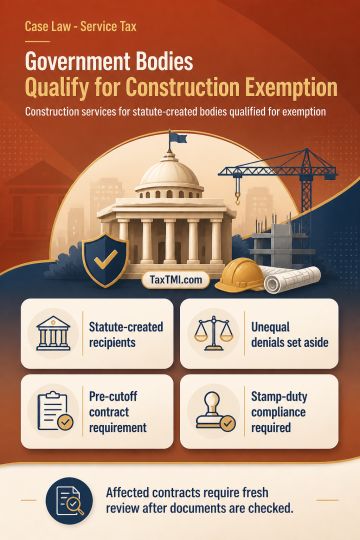
Governmental authority status supports construction-service exemption, while pre-cutoff contract and stamp-duty compliance requires verification on re...
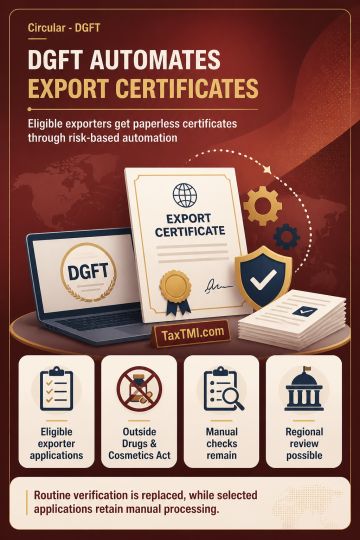
Automated Free Sale and Commerce Certificates enable paperless processing while retaining risk-based manual verification for selected exporter applica...
Page of 4830
Press 'Enter' after typing page number.
161 to 180 of 96587 Results
❮
❯
❯❯
0 / 200
Expand Note
Add to Folder
No Folders have been created
+
Are you sure you want to delete "My most important" ?
The HC ruled that the arbitration clause barring writ jurisdiction was invalid per the CORE vs. ECI SPIC SMO MCML (JV) precedent. The Court determined that the dispute over service tax reimbursement following the 2012 legal regime change was not about liability to pay tax but about which party should bear the burden. The HC held that Railways must reimburse the service tax paid by the appellant, applying the principle that indirect tax incidence passes to the service recipient. Drawing an analogy to SS64A of the Sale of Goods Act, the Court concluded that new tax liabilities arising from state action post-contract should be borne by the service recipient. A writ of mandamus was issued directing Railways to reimburse the appellant with 9% interest.
The HC ruled that the arbitration clause barring writ jurisdiction was invalid per the CORE vs. ECI SPIC SMO MCML (JV) precedent. The Court determined that the dispute over service tax reimbursement following the 2012 legal regime change was not about liability to pay tax but about which party should bear the burden. The HC held that Railways must reimburse the service tax paid by the appellant, applying the principle that indirect tax incidence passes to the service recipient. Drawing an analogy to SS64A of the Sale of Goods Act, the Court concluded that new tax liabilities arising from state action post-contract should be borne by the service recipient. A writ of mandamus was issued directing Railways to reimburse the appellant with 9% interest.
Note: It is a system-generated summary and is for quick reference only.
 TaxTMI
  TaxTMI
 of 4830



 Join Channel