TNMM functional comparability requires excluding rice manufacturers from a pure Basmati rice trader's benchmark and recognising operating export recei...
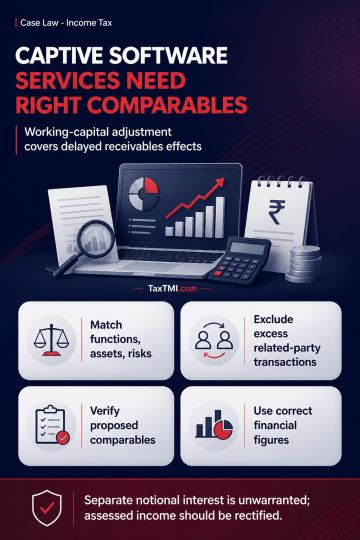
Working-capital adjustment subsumes delayed-receivable effects in TNMM benchmarking of captive software-development services, avoiding separate notion...
Transfer-pricing comparability requires exclusion of financially illogical super-profit comparables and correction of unsupported annual-report and ma...
Charitable character assessment preserves Section 80G approval despite inclusive spiritual teachings and incidental religious expenditure within the s...
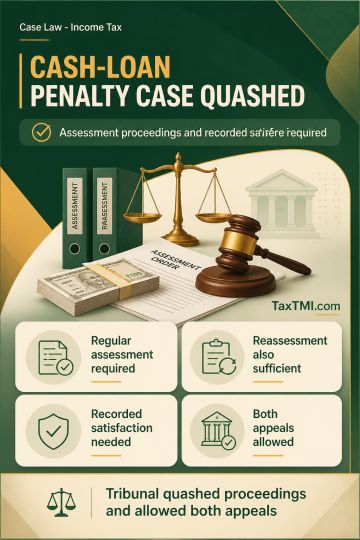
Penalty proceedings for cash-loan acceptance require assessment proceedings and recorded Assessing Officer satisfaction; absent these, the proceedings...
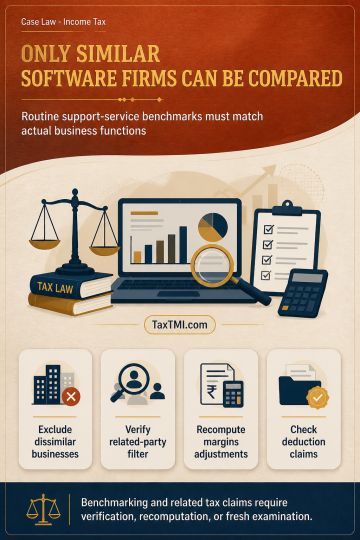
Functional comparability governs software-service benchmarking: dissimilar companies are excluded, while related-party filters, margins and working-ca...
The HC quashed reassessment proceedings for AY 2016-17 initiated via notice u/s 148 issued on July 29, 2022. The Court found that since the reassessment action commenced more than three years after the end of the relevant assessment year, sanction should have been accorded by the Principal Chief Commissioner rather than the Principal Commissioner of Income Tax (PCIT). This jurisdictional defect rendered the reassessment proceedings invalid, as the PCIT lacked competent authority to sanction the action after the three-year limitation period had elapsed. The Court allowed the writ petition on this procedural ground alone.
The HC quashed reassessment proceedings for AY 2016-17 initiated via notice u/s 148 issued on July 29, 2022. The Court found that since the reassessment action commenced more than three years after the end of the relevant assessment year, sanction should have been accorded by the Principal Chief Commissioner rather than the Principal Commissioner of Income Tax (PCIT). This jurisdictional defect rendered the reassessment proceedings invalid, as the PCIT lacked competent authority to sanction the action after the three-year limitation period had elapsed. The Court allowed the writ petition on this procedural ground alone.
Note: It is a system-generated summary and is for quick reference only.
 TaxTMI
  TaxTMI
 of 4830










 Join Channel


