TNMM functional comparability requires excluding rice manufacturers from a pure Basmati rice trader's benchmark and recognising operating export recei...
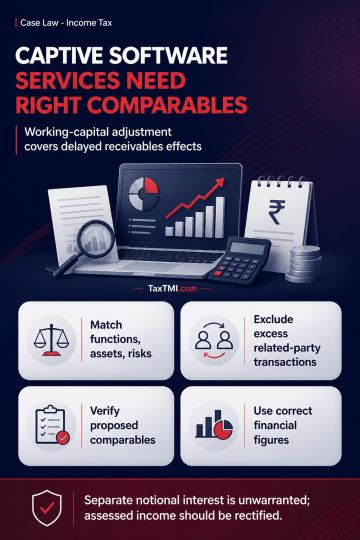
Working-capital adjustment subsumes delayed-receivable effects in TNMM benchmarking of captive software-development services, avoiding separate notion...
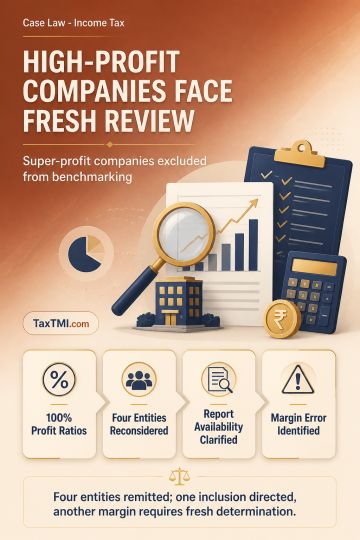
Transfer-pricing comparability requires exclusion of financially illogical super-profit comparables and correction of unsupported annual-report and ma...
Charitable character assessment preserves Section 80G approval despite inclusive spiritual teachings and incidental religious expenditure within the s...
Penalty proceedings for cash-loan acceptance require assessment proceedings and recorded Assessing Officer satisfaction; absent these, the proceedings...
Functional comparability governs software-service benchmarking: dissimilar companies are excluded, while related-party filters, margins and working-ca...
The ITAT quashed reassessment proceedings initiated under s.147 for five assessment years, finding the AO's reopening was based on mere change of opinion rather than new tangible material. The Tribunal noted that information regarding profits from sales made on behalf of UBL had been disclosed in Notes to Accounts during regular assessment proceedings. The reopening was primarily influenced by audit objections and the Chamundi Winery case, demonstrating the AO lacked independent judgment. On merits, the ITAT concurred with the CIT(A)'s determination that the appellant functioned solely as a contract manufacturer for UBL, entitled only to reimbursement of expenses and bottling charges, with UBL being the de facto earner of income from manufacture and sale of liquor.
The ITAT quashed reassessment proceedings initiated under s.147 for five assessment years, finding the AO's reopening was based on mere change of opinion rather than new tangible material. The Tribunal noted that information regarding profits from sales made on behalf of UBL had been disclosed in Notes to Accounts during regular assessment proceedings. The reopening was primarily influenced by audit objections and the Chamundi Winery case, demonstrating the AO lacked independent judgment. On merits, the ITAT concurred with the CIT(A)'s determination that the appellant functioned solely as a contract manufacturer for UBL, entitled only to reimbursement of expenses and bottling charges, with UBL being the de facto earner of income from manufacture and sale of liquor.
Note: It is a system-generated summary and is for quick reference only.
 TaxTMI
  TaxTMI
 of 4830
















 Join Channel


