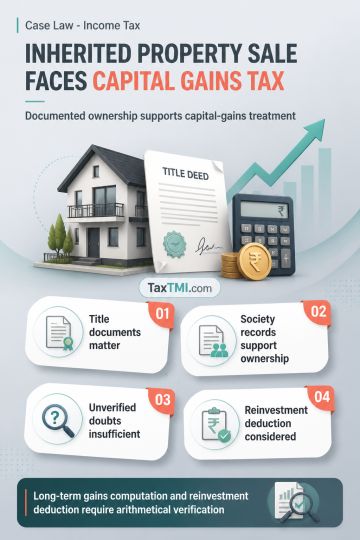
Inherited property sale proceeds require capital-gains treatment where ownership is supported by evidence, not suspicion or unverified signature doubt...
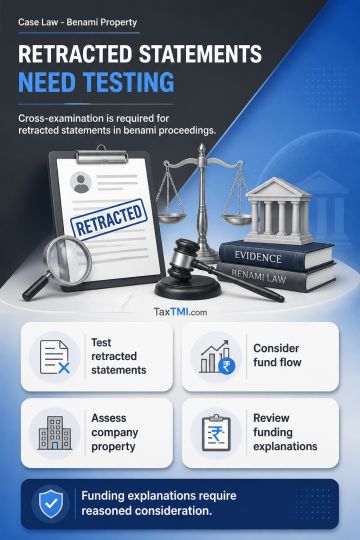
Cross-examination of retracted statements is essential where foundational evidence supports a benami allegation and documented funding explanations re...
Capital-goods exemption covers plant-modernisation accessories, while the import restriction applies only to earlier capital-goods components and spar...
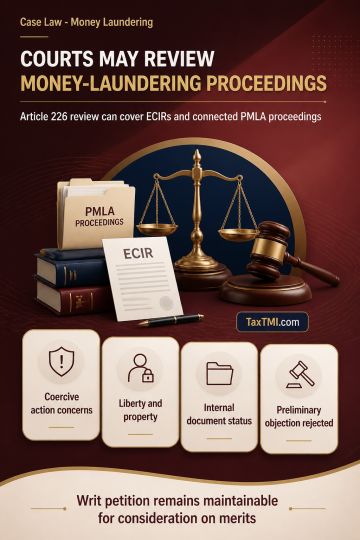
Constitutional judicial review permits challenges to ECIRs and connected money-laundering proceedings where coercive action affects fundamental intere...
The HC ruled that when a taxpayer produces tax invoices and e-way bills with minor typographical errors (such as incorrect vehicle number HR-46C-4623 instead of HR-58C-4623), goods should be released under Section 129(1)(a) rather than 129(1)(b) of the CGST Act. Following precedent established in Halder Enterprises v. State of U.P. & others and the circular dated 31.12.2018, the Court held that when documents establish ownership despite minor errors, penalties under Section 129(1)(b) are inappropriate. The authorities were directed to expedite the release of goods under Section 129(1)(a). Petition allowed.
The HC ruled that when a taxpayer produces tax invoices and e-way bills with minor typographical errors (such as incorrect vehicle number HR-46C-4623 instead of HR-58C-4623), goods should be released under Section 129(1)(a) rather than 129(1)(b) of the CGST Act. Following precedent established in Halder Enterprises v. State of U.P. & others and the circular dated 31.12.2018, the Court held that when documents establish ownership despite minor errors, penalties under Section 129(1)(b) are inappropriate. The authorities were directed to expedite the release of goods under Section 129(1)(a). Petition allowed.
Note: It is a system-generated summary and is for quick reference only.
 TaxTMI
 of 4792









 Join Channel


 TaxTMI