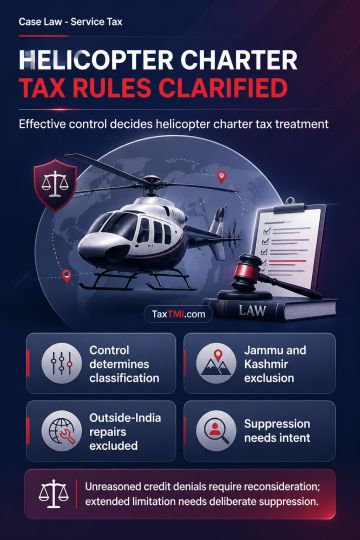
Helicopter charter classification requires effective control analysis, while territorial performance, reasoned credit orders and wilful suppression de...
Specified fund definition expands PAN exemption eligibility for registered alternative investment funds and qualifying International Financial Service...
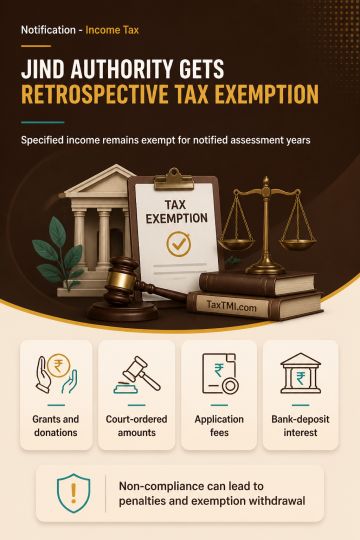
Tax exemption for specified legal-services authority income applies retrospectively, subject to non-commercial activity, unchanged income sources, and...
Approved resolution plans extinguish unsubmitted pre-approval tax claims, preventing later recovery outside the insolvency process and preserving a cl...
The ITAT quashed approvals granted under section 153D, finding them procedurally defective. The approving JCIT had mechanically approved draft assessment orders without demonstrating application of mind, merely stating "Following draft assessment orders are being approved" without reasons or evidence of examining the material. The Tribunal noted that protective and substantive assessments against the company and its Director were approved in separate letters rather than together, with the protective addition approval preceding the substantive one, further indicating mechanical processing. The JCIT's subsequent letter revealed a misconception that approval was "only a formal culmination" rather than a substantive requirement. The ITAT emphasized that approval letters must be speaking orders demonstrating proper application of mind. Approvals were vitiated and quashed in favor of the assessee.
The ITAT quashed approvals granted under section 153D, finding them procedurally defective. The approving JCIT had mechanically approved draft assessment orders without demonstrating application of mind, merely stating "Following draft assessment orders are being approved" without reasons or evidence of examining the material. The Tribunal noted that protective and substantive assessments against the company and its Director were approved in separate letters rather than together, with the protective addition approval preceding the substantive one, further indicating mechanical processing. The JCIT's subsequent letter revealed a misconception that approval was "only a formal culmination" rather than a substantive requirement. The ITAT emphasized that approval letters must be speaking orders demonstrating proper application of mind. Approvals were vitiated and quashed in favor of the assessee.
Note: It is a system-generated summary and is for quick reference only.
 TaxTMI
 of 4801














 Join Channel


 TaxTMI
