Captive power transfer pricing and non-resident export commission rules support deletion of adjustments and withholding disallowance in discussed proc...
Cooperative society deposits, member-interest TDS exemption and credit-facility deduction claims require verification through records and supporting e...
Customs jurisdiction over EPCG condition breaches survives export-obligation discharge certificates, requiring alleged fraud and misdeclaration to be ...
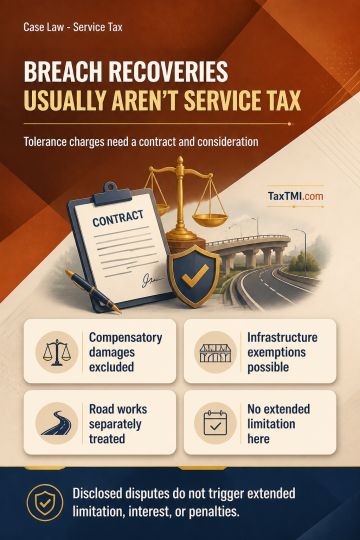
Contractual tolerance requires consideration; breach recoveries, qualifying public infrastructure services and road works escape service tax liability...
The ITAT quashed approvals granted under section 153D, finding them procedurally defective. The approving JCIT had mechanically approved draft assessment orders without demonstrating application of mind, merely stating "Following draft assessment orders are being approved" without reasons or evidence of examining the material. The Tribunal noted that protective and substantive assessments against the company and its Director were approved in separate letters rather than together, with the protective addition approval preceding the substantive one, further indicating mechanical processing. The JCIT's subsequent letter revealed a misconception that approval was "only a formal culmination" rather than a substantive requirement. The ITAT emphasized that approval letters must be speaking orders demonstrating proper application of mind. Approvals were vitiated and quashed in favor of the assessee.
The ITAT quashed approvals granted under section 153D, finding them procedurally defective. The approving JCIT had mechanically approved draft assessment orders without demonstrating application of mind, merely stating "Following draft assessment orders are being approved" without reasons or evidence of examining the material. The Tribunal noted that protective and substantive assessments against the company and its Director were approved in separate letters rather than together, with the protective addition approval preceding the substantive one, further indicating mechanical processing. The JCIT's subsequent letter revealed a misconception that approval was "only a formal culmination" rather than a substantive requirement. The ITAT emphasized that approval letters must be speaking orders demonstrating proper application of mind. Approvals were vitiated and quashed in favor of the assessee.
Note: It is a system-generated summary and is for quick reference only.
 TaxTMI
 of 4801














 Join Channel


 TaxTMI