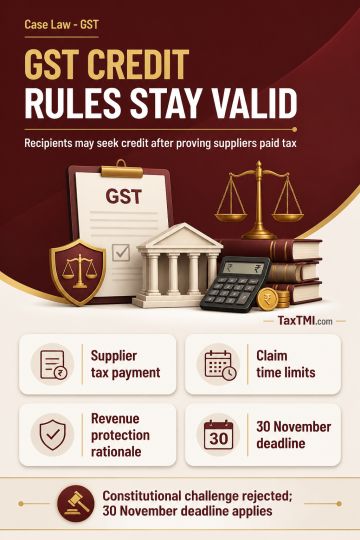
Input tax credit conditions remain constitutionally valid, with eligible recipient claims considered under GST circulars and retrospective filing dead...
Bogus donation receipts justified commission income assessment and defeated political-party tax exemption for inaccurate accounts and reporting failur...
Pure reimbursement without income element escapes tax withholding, while delayed withholding and unsupported provisions face deferred or renewed scrut...
Public benefit requirement defeats charitable registration where residents' association services are reciprocal, member-only facilities governed by mu...
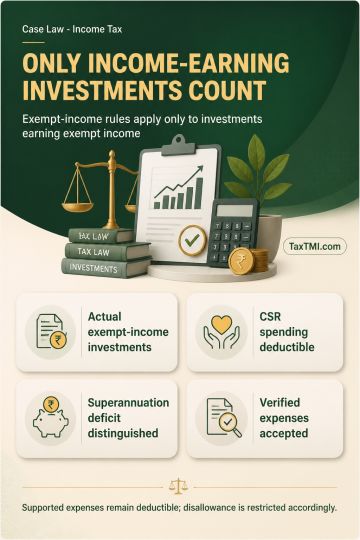
Exempt-income expenditure disallowance is confined to investments that actually generated exempt income, while supported business expenses remain dedu...
The NCLAT upheld that the transaction involving Aryan Spaces constituted a preferential transaction under Section 49 of the Insolvency and Bankruptcy Code, 2016, subject to further investigation by the Resolution Professional. The Tribunal had previously considered the reply filed by the Appellant despite inadvertently recording that no reply was filed. The Tribunal clarified this error in its subsequent order dated 17.08.2023, noting that the Appellant's arguments regarding the MOU dated 15.11.2018 had been duly considered. The appeal was dismissed on grounds of limitation as the Appellant failed to file within the statutory period, and the application for condonation of delay was not pursued by the Appellant who was absent during the hearing.
The NCLAT upheld that the transaction involving Aryan Spaces constituted a preferential transaction under Section 49 of the Insolvency and Bankruptcy Code, 2016, subject to further investigation by the Resolution Professional. The Tribunal had previously considered the reply filed by the Appellant despite inadvertently recording that no reply was filed. The Tribunal clarified this error in its subsequent order dated 17.08.2023, noting that the Appellant's arguments regarding the MOU dated 15.11.2018 had been duly considered. The appeal was dismissed on grounds of limitation as the Appellant failed to file within the statutory period, and the application for condonation of delay was not pursued by the Appellant who was absent during the hearing.
Note: It is a system-generated summary and is for quick reference only.
 TaxTMI
 of 4798















 Join Channel


 TaxTMI
