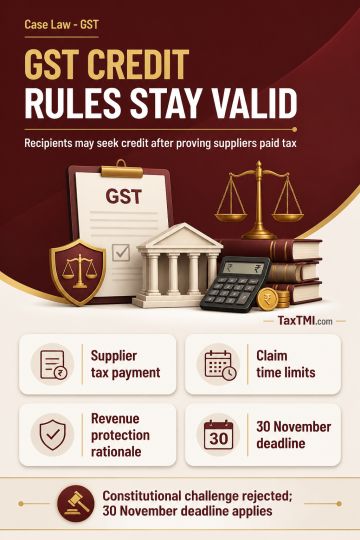
Input tax credit conditions remain constitutionally valid, with eligible recipient claims considered under GST circulars and retrospective filing dead...
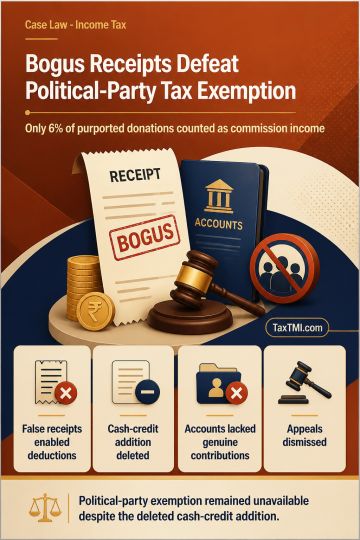
Bogus donation receipts justified commission income assessment and defeated political-party tax exemption for inaccurate accounts and reporting failur...
Pure reimbursement without income element escapes tax withholding, while delayed withholding and unsupported provisions face deferred or renewed scrut...
Public benefit requirement defeats charitable registration where residents' association services are reciprocal, member-only facilities governed by mu...
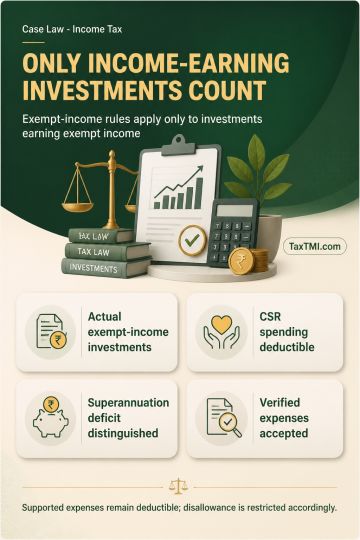
Exempt-income expenditure disallowance is confined to investments that actually generated exempt income, while supported business expenses remain dedu...
The NCLAT dismissed an appeal challenging a Scheme of Arrangement between ICICI Bank Ltd and ICICI Securities Ltd. The Tribunal held that appellants lacked standing to object as they did not meet the shareholding threshold under s.230(4) of Companies Act, 2013. The NCLAT found no conflict between s.230 and Regulation 37 of SEBI Delisting Regulations, ruling that no separate meeting of public shareholders was required as the scheme uniformly affected all equity shareholders. The scheme had received approval from 93.82% of equity shareholders and 71.89% of public shareholders. The appellants' minimal 0.08% shareholding was insufficient to maintain the appeal as "aggrieved persons," with the Tribunal noting that their objections were impeding shareholder democracy.
The NCLAT dismissed an appeal challenging a Scheme of Arrangement between ICICI Bank Ltd and ICICI Securities Ltd. The Tribunal held that appellants lacked standing to object as they did not meet the shareholding threshold under s.230(4) of Companies Act, 2013. The NCLAT found no conflict between s.230 and Regulation 37 of SEBI Delisting Regulations, ruling that no separate meeting of public shareholders was required as the scheme uniformly affected all equity shareholders. The scheme had received approval from 93.82% of equity shareholders and 71.89% of public shareholders. The appellants' minimal 0.08% shareholding was insufficient to maintain the appeal as "aggrieved persons," with the Tribunal noting that their objections were impeding shareholder democracy.
Note: It is a system-generated summary and is for quick reference only.
 TaxTMI
 of 4798







 Join Channel


 TaxTMI
