Separate assessment orders for different years remain valid when distinct notices and hearing opportunities prevent prejudice from combined proceeding...
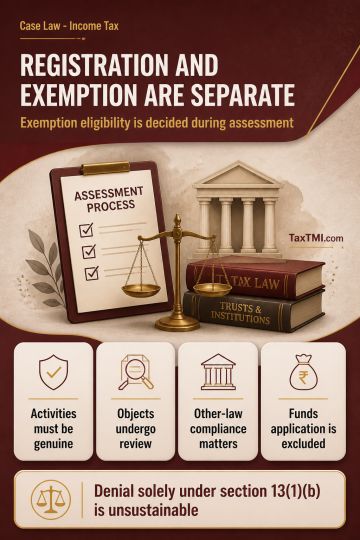
Defined public benefit can retain charitable character; registration renewal requires examining genuine activities and legal compliance, not surplus a...
Capital reduction is distinct from share buy-back, preventing buy-back tax; restructuring interest and related business deductions also survive scruti...
Transfer pricing and tax deductions upheld on established principles, while employee contributions and warranty provisions returned for fresh examinat...
Page of 4803
Press 'Enter' after typing page number.
1201 to 1220 of 96046 Results
❮
❯
❯❯
0 / 200
Expand Note
Add to Folder
No Folders have been created
+
Are you sure you want to delete "My most important" ?
The HC set aside the lower court's order and allowed the petition to proceed to trial in a dishonored cheque case. Despite discrepancies in the cheque (overwriting of date and incomplete amount in words showing "Four lac sixty five" instead of "Four lac sixty five thousand" while the numerical figure showed Rs. 4,65,000/-), the court found these to be inadvertent errors rather than material defects. The court determined that the legal notice clearly specified the cheque amount, and the respondent never replied to refute liability. Technical grounds alone were insufficient to dismiss the complaint under Section 138 of the NI Act without affording parties the opportunity to prove their respective cases at trial.
The HC set aside the lower court's order and allowed the petition to proceed to trial in a dishonored cheque case. Despite discrepancies in the cheque (overwriting of date and incomplete amount in words showing "Four lac sixty five" instead of "Four lac sixty five thousand" while the numerical figure showed Rs. 4,65,000/-), the court found these to be inadvertent errors rather than material defects. The court determined that the legal notice clearly specified the cheque amount, and the respondent never replied to refute liability. Technical grounds alone were insufficient to dismiss the complaint under Section 138 of the NI Act without affording parties the opportunity to prove their respective cases at trial.
Note: It is a system-generated summary and is for quick reference only.
 TaxTMI
 of 4803


















 Join Channel


 TaxTMI

