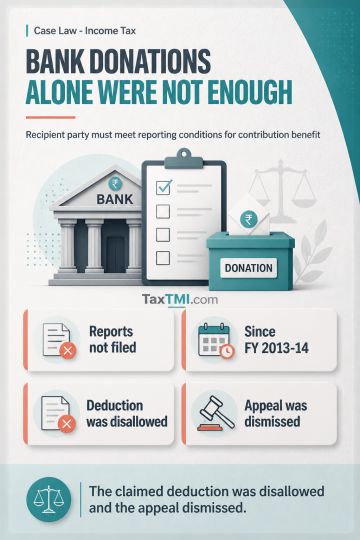
Political contribution deductions require recipient party compliance with contribution-reporting conditions; banking-channel donations alone do not qu...
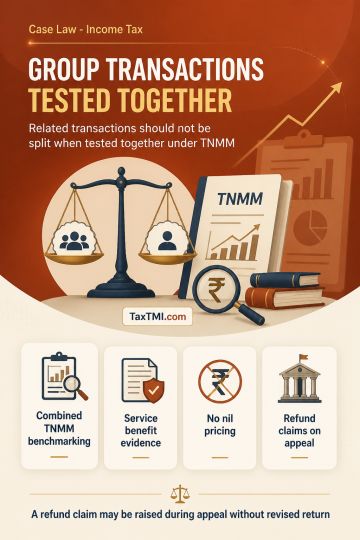
Aggregation under TNMM prevents selective testing of intra-group services without comparable uncontrolled transactions, while appellate additional cla...
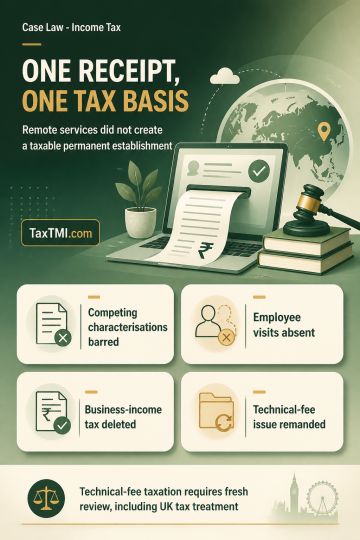
Protective assessment cannot duplicate identical receipts under competing characterisations; remote services did not establish a taxable permanent est...
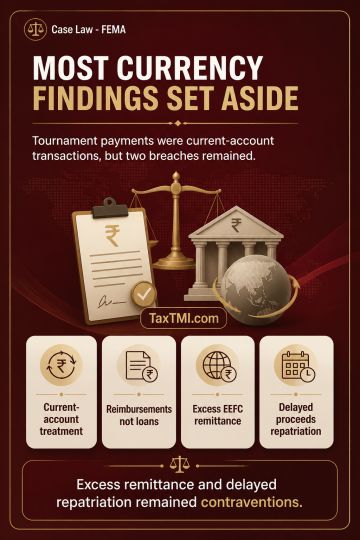
Current account treatment of overseas tournament services removed most FEMA findings, but excess EEFC remittance and delayed repatriation remained bre...
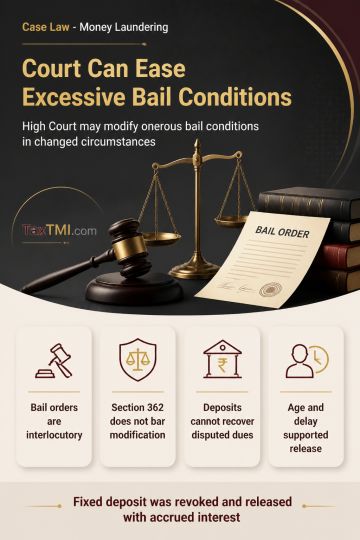
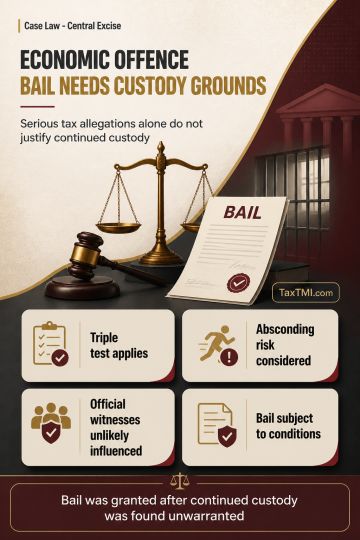
Modification of bail conditions remains available through inherent jurisdiction where onerous deposits undermine justice and cannot recover disputed d...
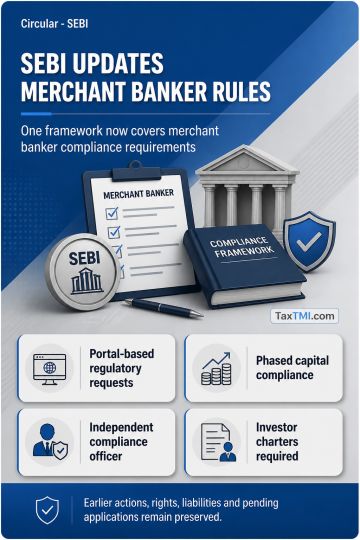
Merchant banker regulation consolidates registration, governance, capital, reporting, outsourcing and investor-protection requirements under an update...
Page of 4798
Press 'Enter' after typing page number.
601 to 620 of 95957 Results
❮
❯
❯❯
0 / 200
Expand Note
Add to Folder
No Folders have been created
+
Are you sure you want to delete "My most important" ?
The HC quashed the impugned order where a demand notice was challenged for improper service. Following Anhad Impex precedent, the Court found that notices uploaded under "additional notices and orders" on the GST portal were not easily accessible and thus escaped the petitioner's attention. While Section 169 permits service via the common portal, the Court emphasized that the purpose of service is to make assessees aware of communications. The Court directed respondents to allow the petitioner to file a response within 30 days and for the notice to be properly adjudicated. The HC left open the question of whether email notifications should accompany portal uploads to ensure effective service.
The HC quashed the impugned order where a demand notice was challenged for improper service. Following Anhad Impex precedent, the Court found that notices uploaded under "additional notices and orders" on the GST portal were not easily accessible and thus escaped the petitioner's attention. While Section 169 permits service via the common portal, the Court emphasized that the purpose of service is to make assessees aware of communications. The Court directed respondents to allow the petitioner to file a response within 30 days and for the notice to be properly adjudicated. The HC left open the question of whether email notifications should accompany portal uploads to ensure effective service.
Note: It is a system-generated summary and is for quick reference only.
 TaxTMI
 of 4798







 Join Channel


 TaxTMI