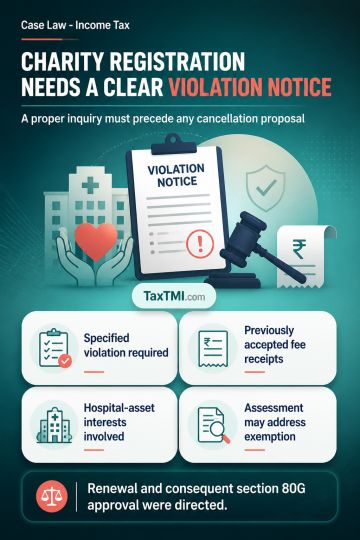
Charitable trust registration requires a specified-violation notice; settled cash deposits and related-party payments did not justify cancellation or ...
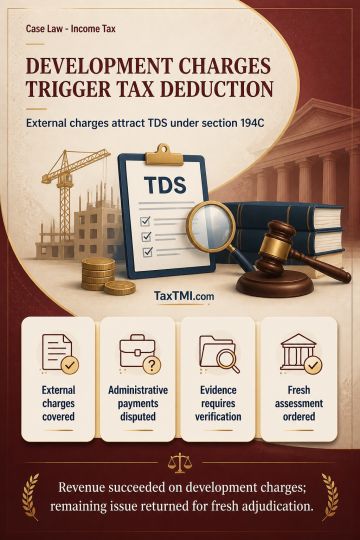
External development charges trigger TDS under section 194C, while disputed administrative payments require factual verification and fresh adjudicatio...
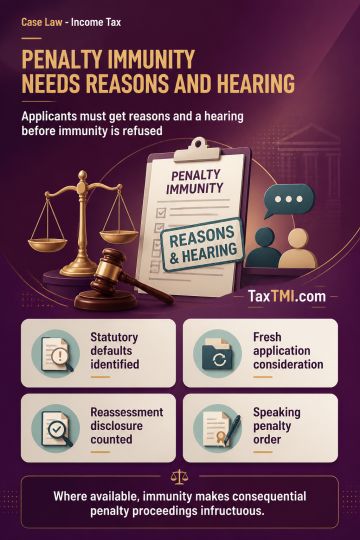
Section 270AA penalty immunity requires identified statutory defaults and a hearing before rejection; reassessment disclosure may constitute under-rep...
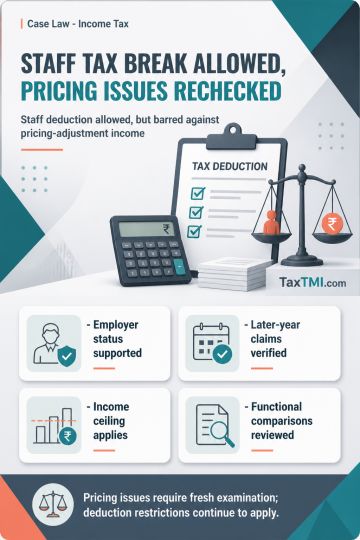
Section 80JJAA employee-cost deduction allowed for deployed staff but barred against transfer-pricing income enhancement, with pricing issues remanded...
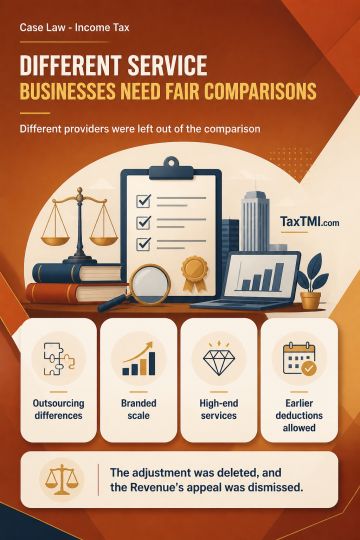
Transfer-pricing methodology protects commercially genuine associated-enterprise payments, while pre-2016 secondary adjustments and related notional i...
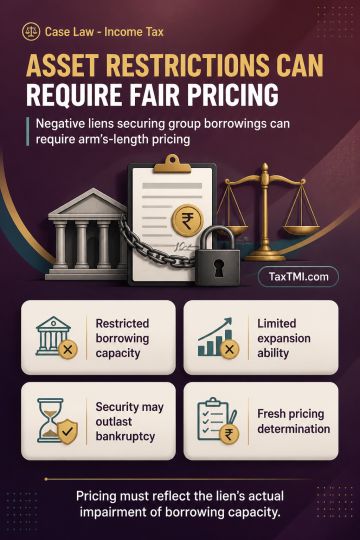
Negative liens over operating assets can constitute international transactions requiring arm's-length pricing reflecting restricted borrowing and expa...
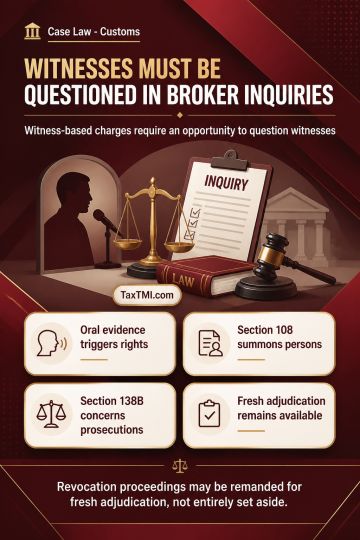
Cross-examination rights in Customs Broker revocation inquiries require witness examination; procedural denial may be cured through fresh adjudication...
The ITAT ruled in favor of the assessee real estate developer, rejecting the Revenue's attempt to apply the Percentage Completion Method under Section 43CB. The Tribunal held that real estate developers appropriately follow AS-9 for revenue recognition, recognizing revenue only upon execution of conveyance deeds and transfer of possession. The ITAT distinguished between contractors (who provide construction services to clients) and developers (who build and sell property at their own risk), finding that the assessee's business model involved selling completed units rather than entering into construction contracts. The Tribunal also upheld the principle of consistency, noting the Revenue had accepted the same accounting method in previous assessment years with no material change in circumstances.
The ITAT ruled in favor of the assessee real estate developer, rejecting the Revenue's attempt to apply the Percentage Completion Method under Section 43CB. The Tribunal held that real estate developers appropriately follow AS-9 for revenue recognition, recognizing revenue only upon execution of conveyance deeds and transfer of possession. The ITAT distinguished between contractors (who provide construction services to clients) and developers (who build and sell property at their own risk), finding that the assessee's business model involved selling completed units rather than entering into construction contracts. The Tribunal also upheld the principle of consistency, noting the Revenue had accepted the same accounting method in previous assessment years with no material change in circumstances.
Note: It is a system-generated summary and is for quick reference only.
 TaxTMI
  TaxTMI
 of 4828












 Join Channel


