TNMM functional comparability requires excluding rice manufacturers from a pure Basmati rice trader's benchmark and recognising operating export recei...
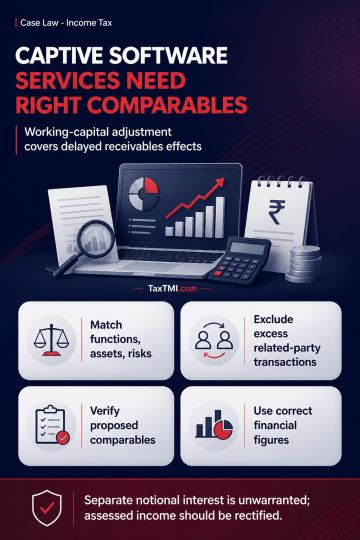
Working-capital adjustment subsumes delayed-receivable effects in TNMM benchmarking of captive software-development services, avoiding separate notion...
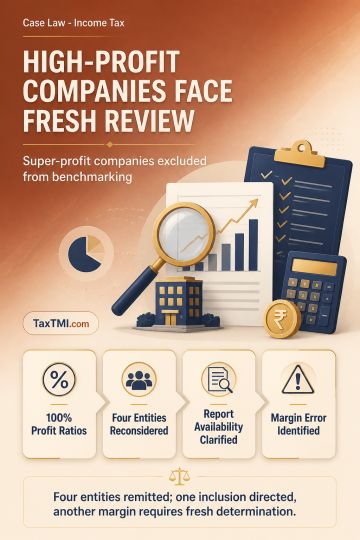
Transfer-pricing comparability requires exclusion of financially illogical super-profit comparables and correction of unsupported annual-report and ma...
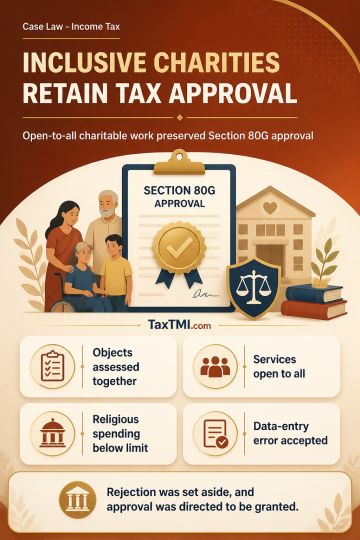
Charitable character assessment preserves Section 80G approval despite inclusive spiritual teachings and incidental religious expenditure within the s...
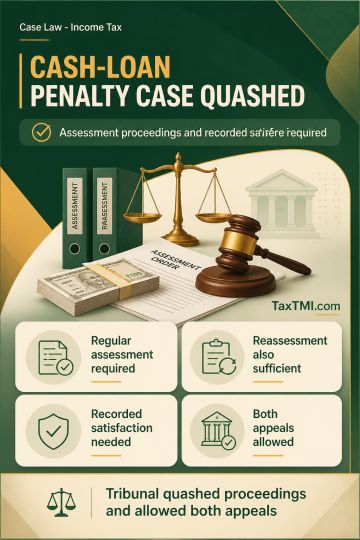
Penalty proceedings for cash-loan acceptance require assessment proceedings and recorded Assessing Officer satisfaction; absent these, the proceedings...
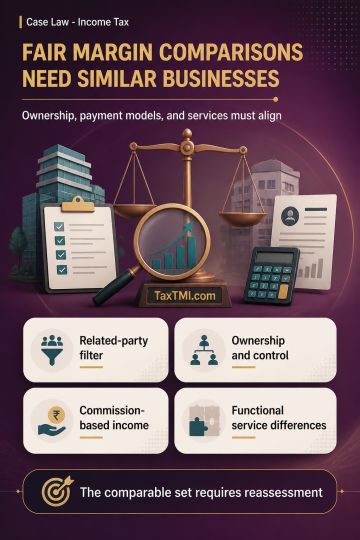
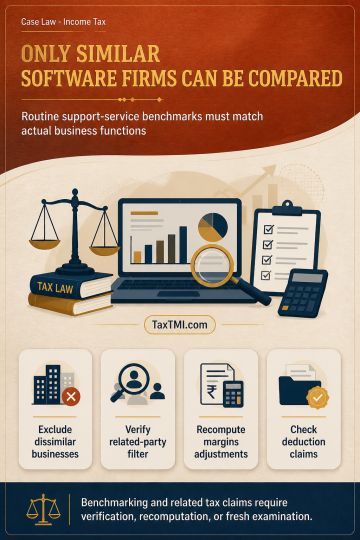
Functional comparability governs software-service benchmarking: dissimilar companies are excluded, while related-party filters, margins and working-ca...
The ITAT ruled in favor of the assessee real estate developer, rejecting the Revenue's attempt to apply the Percentage Completion Method under Section 43CB. The Tribunal held that real estate developers appropriately follow AS-9 for revenue recognition, recognizing revenue only upon execution of conveyance deeds and transfer of possession. The ITAT distinguished between contractors (who provide construction services to clients) and developers (who build and sell property at their own risk), finding that the assessee's business model involved selling completed units rather than entering into construction contracts. The Tribunal also upheld the principle of consistency, noting the Revenue had accepted the same accounting method in previous assessment years with no material change in circumstances.
The ITAT ruled in favor of the assessee real estate developer, rejecting the Revenue's attempt to apply the Percentage Completion Method under Section 43CB. The Tribunal held that real estate developers appropriately follow AS-9 for revenue recognition, recognizing revenue only upon execution of conveyance deeds and transfer of possession. The ITAT distinguished between contractors (who provide construction services to clients) and developers (who build and sell property at their own risk), finding that the assessee's business model involved selling completed units rather than entering into construction contracts. The Tribunal also upheld the principle of consistency, noting the Revenue had accepted the same accounting method in previous assessment years with no material change in circumstances.
Note: It is a system-generated summary and is for quick reference only.
 TaxTMI
  TaxTMI
 of 4830








 Join Channel


