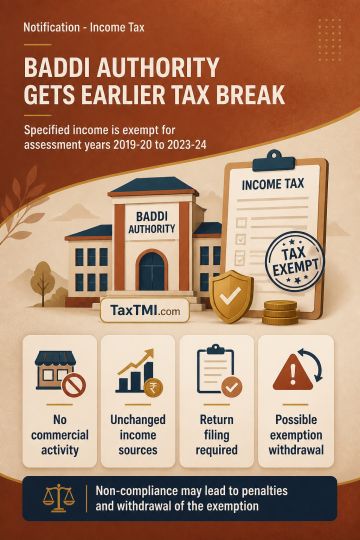
Specified development authority income receives retrospective tax exemption, subject to non-commercial activity, unchanged income sources, and return-...
Unified Brand India framework introduces voluntary Trust Mark certification and funding support for export branding, packaging and global promotional ...
Origin Declaration authentication governs preferential tariff claims under India-UK CETA, requiring a validated reference number before import clearan...
Separate assessment orders for different years remain valid when distinct notices and hearing opportunities prevent prejudice from combined proceeding...
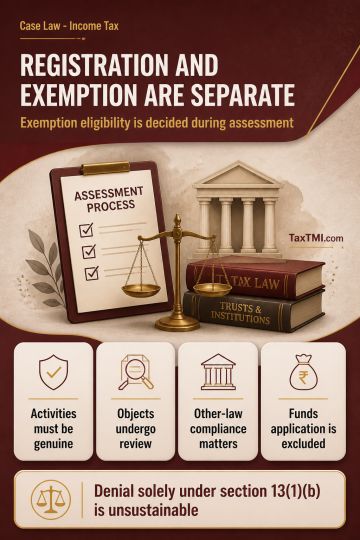
Defined public benefit can retain charitable character; registration renewal requires examining genuine activities and legal compliance, not surplus a...
Capital reduction is distinct from share buy-back, preventing buy-back tax; restructuring interest and related business deductions also survive scruti...
The HC ruled in favor of the petitioner, ordering the release of seized goods upon deposit of the valuation amount. The court found that the respondent failed to provide notice of extension before the six-month seizure period expired, violating Section 67(7) of the CGST Act. The court rejected the respondent's claim of "sufficient cause" based on documents not in the public domain, which denied the petitioner opportunity to respond. The HC emphasized that delayed valuation despite the assessee's cooperation cannot constitute "sufficient cause" for extending seizure. The court clarified that confiscation under Section 130 cannot be equated with seizure powers under Section 67, and that affected parties must be shown "sufficient cause" with proper notice and hearing rights.
The HC ruled in favor of the petitioner, ordering the release of seized goods upon deposit of the valuation amount. The court found that the respondent failed to provide notice of extension before the six-month seizure period expired, violating Section 67(7) of the CGST Act. The court rejected the respondent's claim of "sufficient cause" based on documents not in the public domain, which denied the petitioner opportunity to respond. The HC emphasized that delayed valuation despite the assessee's cooperation cannot constitute "sufficient cause" for extending seizure. The court clarified that confiscation under Section 130 cannot be equated with seizure powers under Section 67, and that affected parties must be shown "sufficient cause" with proper notice and hearing rights.
Note: It is a system-generated summary and is for quick reference only.
 TaxTMI
 of 4805


















 Join Channel


 TaxTMI
