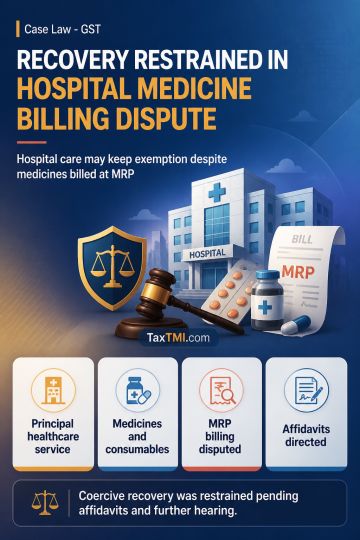
Composite inpatient healthcare supply may retain exemption despite MRP medicine billing, while separate taxable sale characterisation remains disputed...
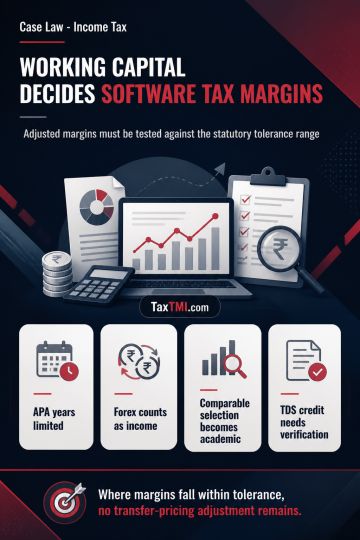
Working-capital adjustment determines whether software-services transfer-pricing margins fall within the statutory tolerance range, eliminating any ad...
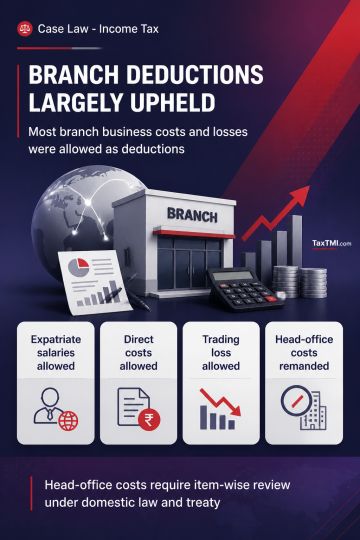
Permanent establishment deductions upheld for expatriate salaries, direct costs and trading losses, while head-office costs require fresh classificati...
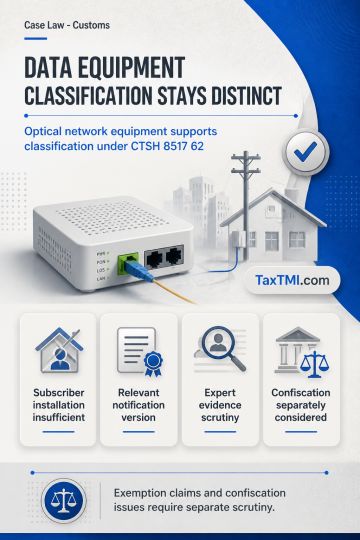
Data transmission equipment classification under CTSH 8517 62 remains distinct from residual classification, with exemption evidence requiring scrutin...
The HC ruled in favor of the petitioner, ordering the release of seized goods upon deposit of the valuation amount. The court found that the respondent failed to provide notice of extension before the six-month seizure period expired, violating Section 67(7) of the CGST Act. The court rejected the respondent's claim of "sufficient cause" based on documents not in the public domain, which denied the petitioner opportunity to respond. The HC emphasized that delayed valuation despite the assessee's cooperation cannot constitute "sufficient cause" for extending seizure. The court clarified that confiscation under Section 130 cannot be equated with seizure powers under Section 67, and that affected parties must be shown "sufficient cause" with proper notice and hearing rights.
The HC ruled in favor of the petitioner, ordering the release of seized goods upon deposit of the valuation amount. The court found that the respondent failed to provide notice of extension before the six-month seizure period expired, violating Section 67(7) of the CGST Act. The court rejected the respondent's claim of "sufficient cause" based on documents not in the public domain, which denied the petitioner opportunity to respond. The HC emphasized that delayed valuation despite the assessee's cooperation cannot constitute "sufficient cause" for extending seizure. The court clarified that confiscation under Section 130 cannot be equated with seizure powers under Section 67, and that affected parties must be shown "sufficient cause" with proper notice and hearing rights.
Note: It is a system-generated summary and is for quick reference only.
 TaxTMI
 of 4803





 Join Channel


 TaxTMI
