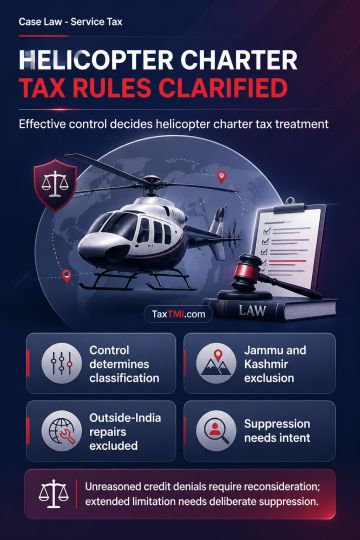
Helicopter charter classification requires effective control analysis, while territorial performance, reasoned credit orders and wilful suppression de...
Specified fund definition expands PAN exemption eligibility for registered alternative investment funds and qualifying International Financial Service...
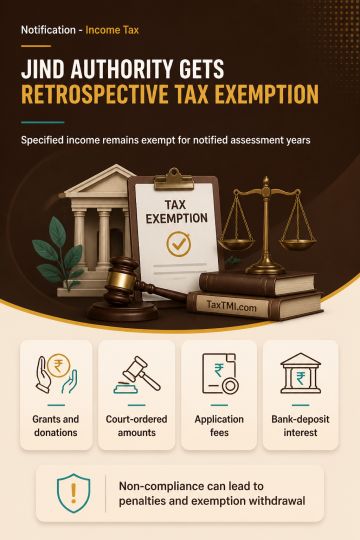
Tax exemption for specified legal-services authority income applies retrospectively, subject to non-commercial activity, unchanged income sources, and...
Approved resolution plans extinguish unsubmitted pre-approval tax claims, preventing later recovery outside the insolvency process and preserving a cl...
The AAAR dismissed the appeal due to late filing beyond the statutorily prescribed time limits under Section 100(2) of CGST Act, 2017. The Authority clarified that while it has discretionary power to condone delays, this power is strictly limited to an additional 30 days beyond the initial 30-day filing period. The appellant failed to demonstrate sufficient cause for the delay, with their first communication occurring on 17.10.2024, well after both the original deadline (30.08.2024) and the condonable period (29.09.2024) had expired. The AAAR emphasized that ignorance of filing procedures cannot excuse non-compliance, and the discretionary power to condone delays is not obligatory but contingent upon showing sufficient cause within statutory timeframes.
The AAAR dismissed the appeal due to late filing beyond the statutorily prescribed time limits under Section 100(2) of CGST Act, 2017. The Authority clarified that while it has discretionary power to condone delays, this power is strictly limited to an additional 30 days beyond the initial 30-day filing period. The appellant failed to demonstrate sufficient cause for the delay, with their first communication occurring on 17.10.2024, well after both the original deadline (30.08.2024) and the condonable period (29.09.2024) had expired. The AAAR emphasized that ignorance of filing procedures cannot excuse non-compliance, and the discretionary power to condone delays is not obligatory but contingent upon showing sufficient cause within statutory timeframes.
Note: It is a system-generated summary and is for quick reference only.
 TaxTMI
 of 4801











 Join Channel


 TaxTMI
