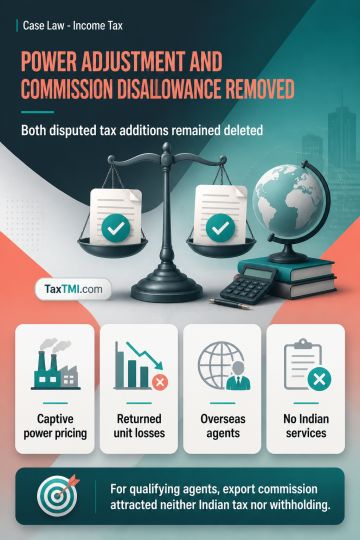
Captive power transfer pricing and non-resident export commission rules support deletion of adjustments and withholding disallowance in discussed proc...
Cooperative society deposits, member-interest TDS exemption and credit-facility deduction claims require verification through records and supporting e...
Customs jurisdiction over EPCG condition breaches survives export-obligation discharge certificates, requiring alleged fraud and misdeclaration to be ...
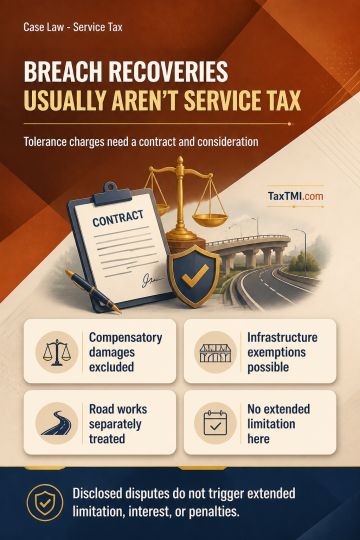
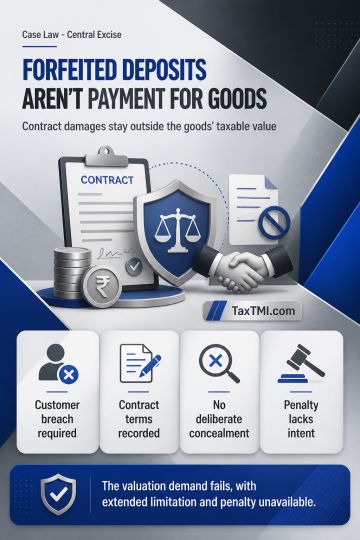
Contractual tolerance requires consideration; breach recoveries, qualifying public infrastructure services and road works escape service tax liability...
The AAAR dismissed the appeal due to late filing beyond the statutorily prescribed time limits under Section 100(2) of CGST Act, 2017. The Authority clarified that while it has discretionary power to condone delays, this power is strictly limited to an additional 30 days beyond the initial 30-day filing period. The appellant failed to demonstrate sufficient cause for the delay, with their first communication occurring on 17.10.2024, well after both the original deadline (30.08.2024) and the condonable period (29.09.2024) had expired. The AAAR emphasized that ignorance of filing procedures cannot excuse non-compliance, and the discretionary power to condone delays is not obligatory but contingent upon showing sufficient cause within statutory timeframes.
The AAAR dismissed the appeal due to late filing beyond the statutorily prescribed time limits under Section 100(2) of CGST Act, 2017. The Authority clarified that while it has discretionary power to condone delays, this power is strictly limited to an additional 30 days beyond the initial 30-day filing period. The appellant failed to demonstrate sufficient cause for the delay, with their first communication occurring on 17.10.2024, well after both the original deadline (30.08.2024) and the condonable period (29.09.2024) had expired. The AAAR emphasized that ignorance of filing procedures cannot excuse non-compliance, and the discretionary power to condone delays is not obligatory but contingent upon showing sufficient cause within statutory timeframes.
Note: It is a system-generated summary and is for quick reference only.
 TaxTMI
 of 4800










 Join Channel


 TaxTMI
