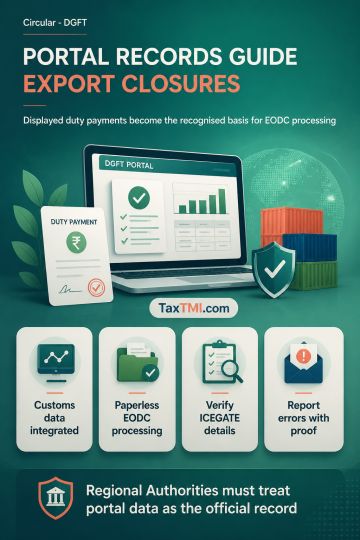
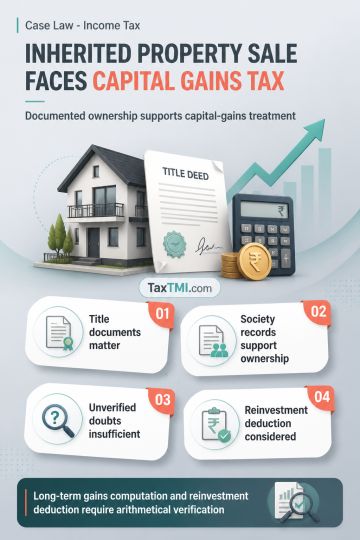
Inherited property sale proceeds require capital-gains treatment where ownership is supported by evidence, not suspicion or unverified signature doubt...
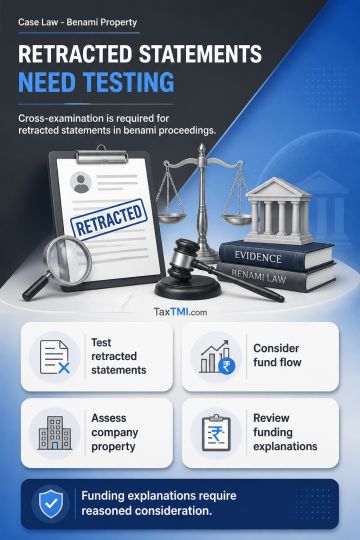
Cross-examination of retracted statements is essential where foundational evidence supports a benami allegation and documented funding explanations re...
Capital-goods exemption covers plant-modernisation accessories, while the import restriction applies only to earlier capital-goods components and spar...
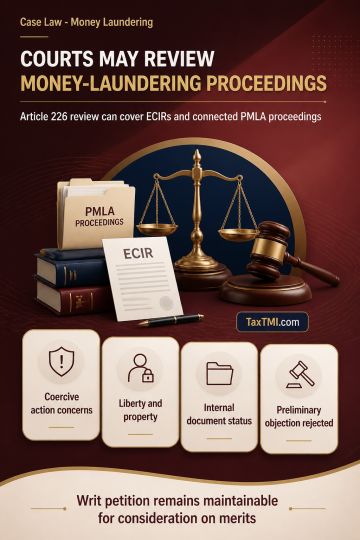
Constitutional judicial review permits challenges to ECIRs and connected money-laundering proceedings where coercive action affects fundamental intere...
The AAAR dismissed the appeal due to late filing beyond the statutorily prescribed time limits under Section 100(2) of CGST Act, 2017. The Authority clarified that while it has discretionary power to condone delays, this power is strictly limited to an additional 30 days beyond the initial 30-day filing period. The appellant failed to demonstrate sufficient cause for the delay, with their first communication occurring on 17.10.2024, well after both the original deadline (30.08.2024) and the condonable period (29.09.2024) had expired. The AAAR emphasized that ignorance of filing procedures cannot excuse non-compliance, and the discretionary power to condone delays is not obligatory but contingent upon showing sufficient cause within statutory timeframes.
The AAAR dismissed the appeal due to late filing beyond the statutorily prescribed time limits under Section 100(2) of CGST Act, 2017. The Authority clarified that while it has discretionary power to condone delays, this power is strictly limited to an additional 30 days beyond the initial 30-day filing period. The appellant failed to demonstrate sufficient cause for the delay, with their first communication occurring on 17.10.2024, well after both the original deadline (30.08.2024) and the condonable period (29.09.2024) had expired. The AAAR emphasized that ignorance of filing procedures cannot excuse non-compliance, and the discretionary power to condone delays is not obligatory but contingent upon showing sufficient cause within statutory timeframes.
Note: It is a system-generated summary and is for quick reference only.
 TaxTMI
 of 4792












 Join Channel


 TaxTMI