Service of notice and contractual debt acknowledgment preserved insolvency admission against a corporate guarantor despite limitation and natural just...
Original works exemption excludes standalone boulder transportation, leaving subcontracted railway-project transport services subject to service tax l...
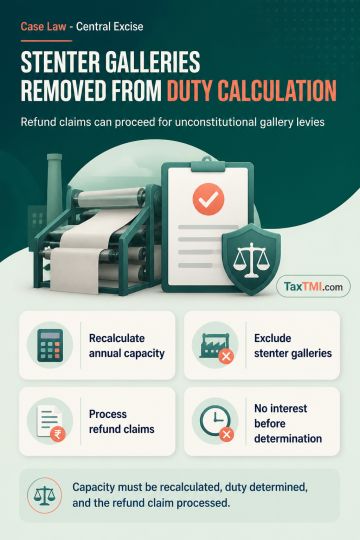
Annual production capacity determinations excluding stenter galleries support refunds for unconstitutional excise levies without an unjust-enrichment ...
Vicarious liability for cheque dishonour requires specific allegations of responsibility and cheque signatory; generic director allegations cannot sus...
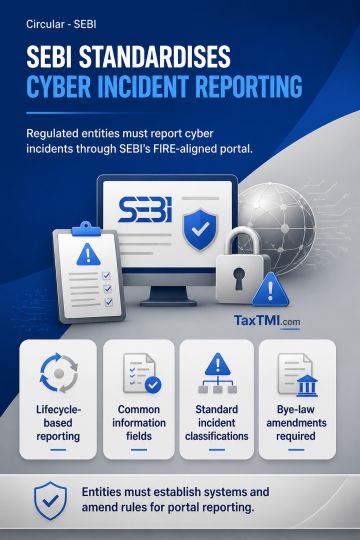
IT Resilience Index requires market infrastructure institutions to automate resilience scoring, early warnings, and continuous service-delivery monito...
HC dismissed the petition challenging the rejection of a request for relaxation under Rule 9C read with Section 72A regarding carry-forward of losses from amalgamated companies. The court determined that the petitioner failed to achieve the required production capacity (50%) even during the requested three-year extension period. The court emphasized that Section 72A's objective is not merely to encourage corporate restructuring but to extend benefits only where amalgamating companies' industrial undertakings are genuinely revived or continued. The petitioner's multiple requests to modify conditions-first seeking time extensions and later requesting reduced production thresholds (from 50% to 36-42%)-were found unmeritorious, as the application was filed just one day before the expiry of the four-year post-amalgamation period.
HC dismissed the petition challenging the rejection of a request for relaxation under Rule 9C read with Section 72A regarding carry-forward of losses from amalgamated companies. The court determined that the petitioner failed to achieve the required production capacity (50%) even during the requested three-year extension period. The court emphasized that Section 72A's objective is not merely to encourage corporate restructuring but to extend benefits only where amalgamating companies' industrial undertakings are genuinely revived or continued. The petitioner's multiple requests to modify conditions-first seeking time extensions and later requesting reduced production thresholds (from 50% to 36-42%)-were found unmeritorious, as the application was filed just one day before the expiry of the four-year post-amalgamation period.
Note: It is a system-generated summary and is for quick reference only.
 TaxTMI
  TaxTMI
 of 4828












 Join Channel