Defined public benefit can retain charitable character; registration renewal requires examining genuine activities and legal compliance, not surplus a...
Capital reduction is distinct from share buy-back, preventing buy-back tax; restructuring interest and related business deductions also survive scruti...
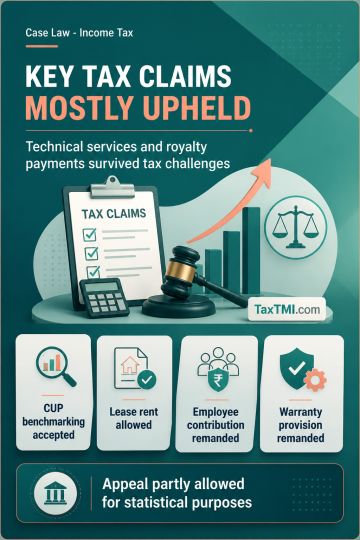
Transfer pricing and tax deductions upheld on established principles, while employee contributions and warranty provisions returned for fresh examinat...
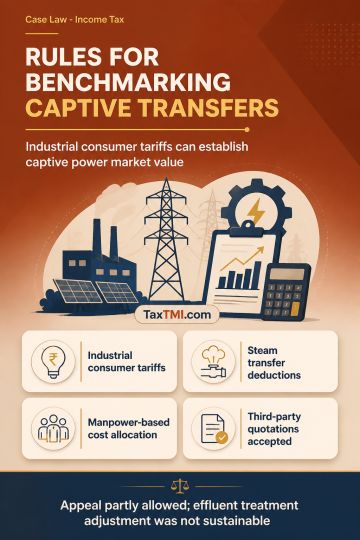
Captive transfer pricing relies on industrial consumer tariffs, while genuine quotations can benchmark effluent treatment transfers under the Other Me...
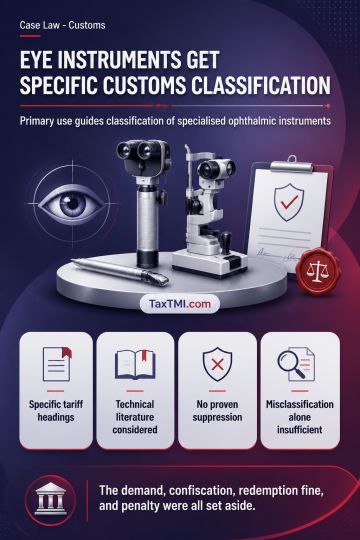
Specific tariff classification for ophthalmic instruments and extended limitation principles determine the treatment of duty demands, confiscation, an...
Integrated golf function determines classification, placing launch monitors and simulators under other golf equipment rather than measuring instrument...
The ITAT ruled in favor of the Revenue regarding the classification of government financial aid. Applying the "purpose test" established in Serum Institute of India Private Limited v. Union of India, the Tribunal determined that subsidies helping an assessee operate business more profitably or meet daily expenses constitute taxable revenue receipts, while those for establishing new units or expansion qualify as non-taxable capital receipts. The Finance Act, 2015 amendment to Section 2(24)(xviii) further clarified that all government assistance (subsidies, grants, incentives, etc.) constitutes taxable income unless specifically used to determine an asset's actual cost. Based on these principles, the Revenue's appeal was allowed.
The ITAT ruled in favor of the Revenue regarding the classification of government financial aid. Applying the "purpose test" established in Serum Institute of India Private Limited v. Union of India, the Tribunal determined that subsidies helping an assessee operate business more profitably or meet daily expenses constitute taxable revenue receipts, while those for establishing new units or expansion qualify as non-taxable capital receipts. The Finance Act, 2015 amendment to Section 2(24)(xviii) further clarified that all government assistance (subsidies, grants, incentives, etc.) constitutes taxable income unless specifically used to determine an asset's actual cost. Based on these principles, the Revenue's appeal was allowed.
Note: It is a system-generated summary and is for quick reference only.
 TaxTMI
 of 4794














 Join Channel


 TaxTMI
