Prolonged sterilisation of development rights supports capital-gains treatment, while business-income disallowances cannot govern capital-gains comput...
Additional evidence in transfer pricing dispute leads to fresh examination, while tax deductions, TDS credit, fee and refund interest require verifica...
Category II AIF pass-through taxation preserves non-business income character; investment receipts cannot be reclassified without applying recognised ...
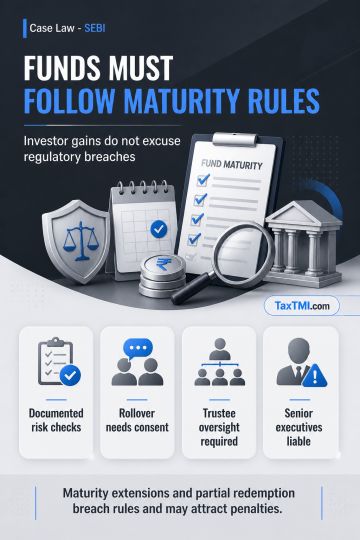
Mutual fund maturity rules require proper rollover, redemption, disclosure, and due diligence; investor gains cannot excuse regulatory breaches or pen...
Threshold exemption excludes exempt services, while stamp-paper purchases avoid reverse charge; consequential service tax penalties were also set asid...
The NCLAT upheld the dismissal of a Section 7 petition filed by the appellant against the corporate debtor (CD), finding it was initiated with malicious intent. The tribunal determined that the Rs. 92,00,000 transferred to the CD was not a financial debt but an equity investment to acquire control and directorship. During the relevant period (July-October 2019), common directors served in both entities, indicating the appellant was a related party. The arrangement appeared designed to obstruct SBI's recovery efforts under SARFAESI Act rather than seek genuine resolution. The tribunal concluded the petition was fraudulent, with transactions orchestrated by Mittal family members who controlled both entities, making the claim self-serving and legally untenable. The Rs. 10,00,000 penalty imposed on the appellant was deemed justified.
The NCLAT upheld the dismissal of a Section 7 petition filed by the appellant against the corporate debtor (CD), finding it was initiated with malicious intent. The tribunal determined that the Rs. 92,00,000 transferred to the CD was not a financial debt but an equity investment to acquire control and directorship. During the relevant period (July-October 2019), common directors served in both entities, indicating the appellant was a related party. The arrangement appeared designed to obstruct SBI's recovery efforts under SARFAESI Act rather than seek genuine resolution. The tribunal concluded the petition was fraudulent, with transactions orchestrated by Mittal family members who controlled both entities, making the claim self-serving and legally untenable. The Rs. 10,00,000 penalty imposed on the appellant was deemed justified.
Note: It is a system-generated summary and is for quick reference only.
 TaxTMI
 of 4792





















 Join Channel


 TaxTMI
