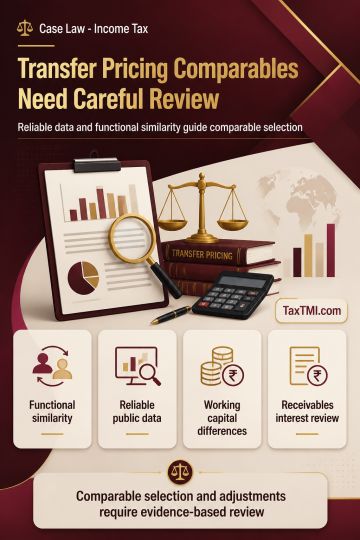
Transfer pricing comparability requires functional alignment, reliable financial data, and careful review of working capital and receivables adjustmen...
Transfer pricing rules require benchmarking corporate guarantees and associated-enterprise advances, while invalid domestic-transaction adjustments ca...
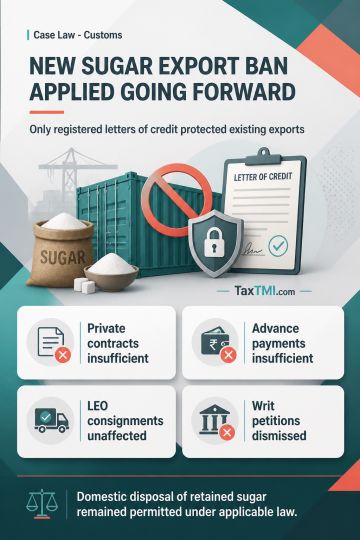
Prospective sugar export prohibition required registered letters of credit; private contracts and export quotas created no enforceable continuation ri...
Retroactive interim-moratorium exclusion permits protective asset disclosure and preservation measures against personal guarantors pending arbitration...
Page of 4778
Press 'Enter' after typing page number.
61 to 80 of 95557 Results
❮
❯
❯❯
0 / 200
Expand Note
Add to Folder
No Folders have been created
+
Are you sure you want to delete "My most important" ?
The NCLAT upheld the dismissal of a Section 7 petition filed by the appellant against the corporate debtor (CD), finding it was initiated with malicious intent. The tribunal determined that the Rs. 92,00,000 transferred to the CD was not a financial debt but an equity investment to acquire control and directorship. During the relevant period (July-October 2019), common directors served in both entities, indicating the appellant was a related party. The arrangement appeared designed to obstruct SBI's recovery efforts under SARFAESI Act rather than seek genuine resolution. The tribunal concluded the petition was fraudulent, with transactions orchestrated by Mittal family members who controlled both entities, making the claim self-serving and legally untenable. The Rs. 10,00,000 penalty imposed on the appellant was deemed justified.
The NCLAT upheld the dismissal of a Section 7 petition filed by the appellant against the corporate debtor (CD), finding it was initiated with malicious intent. The tribunal determined that the Rs. 92,00,000 transferred to the CD was not a financial debt but an equity investment to acquire control and directorship. During the relevant period (July-October 2019), common directors served in both entities, indicating the appellant was a related party. The arrangement appeared designed to obstruct SBI's recovery efforts under SARFAESI Act rather than seek genuine resolution. The tribunal concluded the petition was fraudulent, with transactions orchestrated by Mittal family members who controlled both entities, making the claim self-serving and legally untenable. The Rs. 10,00,000 penalty imposed on the appellant was deemed justified.
Note: It is a system-generated summary and is for quick reference only.
 TaxTMI
 of 4778














 Join Channel


 TaxTMI