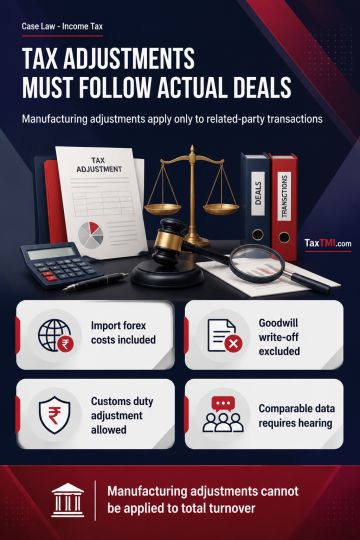
International transaction benchmarking restricts transfer pricing adjustments to associated-enterprise dealings, while functional comparability govern...
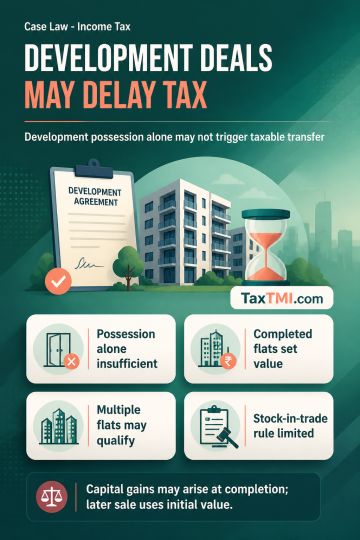
Joint development agreements defer taxable transfer where possession lacks part performance, while completed flats determine consideration and exempti...
Passenger baggage re-export requires true declaration and cannot be granted indirectly through discretionary redemption of undeclared prohibited goods...
The SC held that penalties imposed by the NCDRC are regulatory in nature and do not constitute "debt" under the IBC. The moratorium under Section 96 of IBC does not extend to regulatory penalties imposed for non-compliance with consumer protection laws. The Court distinguished between civil proceedings (generally stayed under IBC provisions) and regulatory penalties, which arise from failure to comply with consumer protection norms rather than from any debt owed to creditors. Such penalties are classified as "excluded debts" under Section 79(15) of IBC and therefore do not benefit from the moratorium. The appellant was directed to comply with the NCDRC penalties within eight weeks.
The SC held that penalties imposed by the NCDRC are regulatory in nature and do not constitute "debt" under the IBC. The moratorium under Section 96 of IBC does not extend to regulatory penalties imposed for non-compliance with consumer protection laws. The Court distinguished between civil proceedings (generally stayed under IBC provisions) and regulatory penalties, which arise from failure to comply with consumer protection norms rather than from any debt owed to creditors. Such penalties are classified as "excluded debts" under Section 79(15) of IBC and therefore do not benefit from the moratorium. The appellant was directed to comply with the NCDRC penalties within eight weeks.
Note: It is a system-generated summary and is for quick reference only.
 TaxTMI
 of 4782














 Join Channel


 TaxTMI
