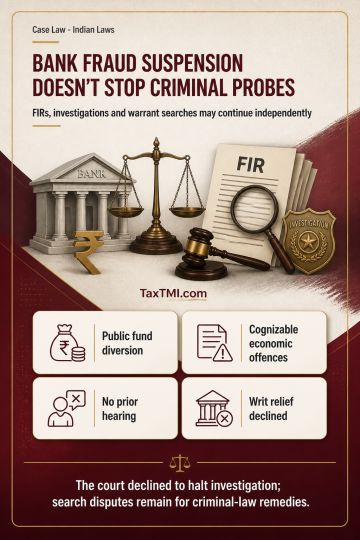
Administrative fraud classification suspension does not halt independent criminal investigation or warrant-based searches into alleged economic offenc...
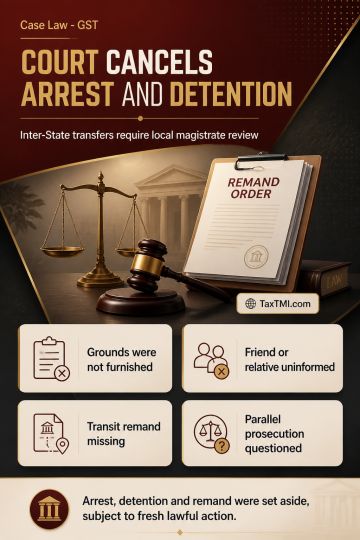
Arrest safeguards and transit remand requirements invalidated detention following inter-State transfer without communicated grounds or magistrate auth...
Page of 4788
Press 'Enter' after typing page number.
481 to 500 of 95752 Results
❮
❯
❯❯
0 / 200
Expand Note
Add to Folder
No Folders have been created
+
Are you sure you want to delete "My most important" ?
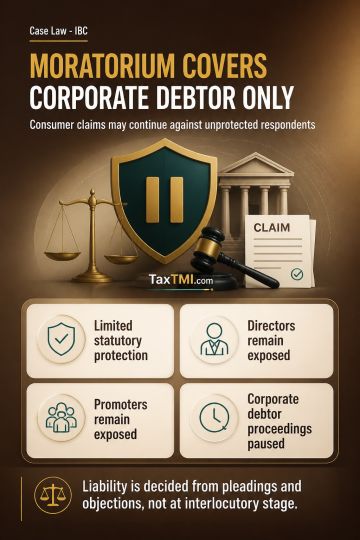
The SC held that penalties imposed by the NCDRC are regulatory in nature and do not constitute "debt" under the IBC. The moratorium under Section 96 of IBC does not extend to regulatory penalties imposed for non-compliance with consumer protection laws. The Court distinguished between civil proceedings (generally stayed under IBC provisions) and regulatory penalties, which arise from failure to comply with consumer protection norms rather than from any debt owed to creditors. Such penalties are classified as "excluded debts" under Section 79(15) of IBC and therefore do not benefit from the moratorium. The appellant was directed to comply with the NCDRC penalties within eight weeks.
The SC held that penalties imposed by the NCDRC are regulatory in nature and do not constitute "debt" under the IBC. The moratorium under Section 96 of IBC does not extend to regulatory penalties imposed for non-compliance with consumer protection laws. The Court distinguished between civil proceedings (generally stayed under IBC provisions) and regulatory penalties, which arise from failure to comply with consumer protection norms rather than from any debt owed to creditors. Such penalties are classified as "excluded debts" under Section 79(15) of IBC and therefore do not benefit from the moratorium. The appellant was directed to comply with the NCDRC penalties within eight weeks.
Note: It is a system-generated summary and is for quick reference only.
 TaxTMI
 of 4788






 Join Channel


 TaxTMI