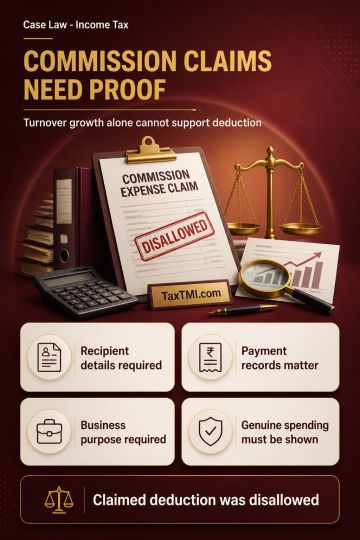
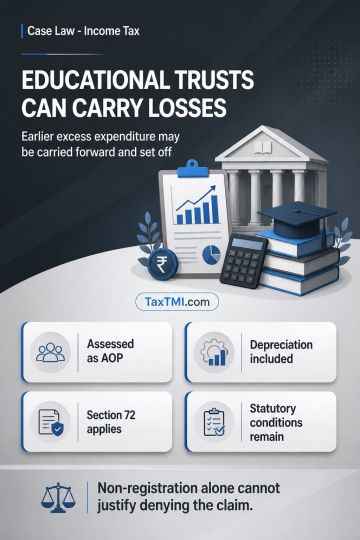
Business expenditure deduction requires proof of genuine commission payments and commercial allowability; turnover growth alone cannot validate the cl...
Article 8 treaty coverage excluded third-party airline support services, while documented demonetisation cash receipts remained accepted business inco...
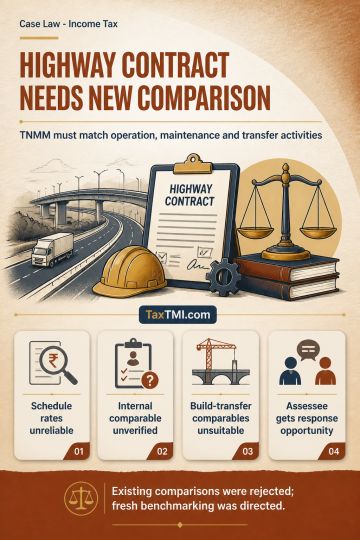
Functional comparability under TNMM requires highway contract benchmarks to reflect operation, maintenance and transfer activities, requiring fresh be...
The SC held that penalties imposed by the NCDRC are regulatory in nature and do not constitute "debt" under the IBC. The moratorium under Section 96 of IBC does not extend to regulatory penalties imposed for non-compliance with consumer protection laws. The Court distinguished between civil proceedings (generally stayed under IBC provisions) and regulatory penalties, which arise from failure to comply with consumer protection norms rather than from any debt owed to creditors. Such penalties are classified as "excluded debts" under Section 79(15) of IBC and therefore do not benefit from the moratorium. The appellant was directed to comply with the NCDRC penalties within eight weeks.
The SC held that penalties imposed by the NCDRC are regulatory in nature and do not constitute "debt" under the IBC. The moratorium under Section 96 of IBC does not extend to regulatory penalties imposed for non-compliance with consumer protection laws. The Court distinguished between civil proceedings (generally stayed under IBC provisions) and regulatory penalties, which arise from failure to comply with consumer protection norms rather than from any debt owed to creditors. Such penalties are classified as "excluded debts" under Section 79(15) of IBC and therefore do not benefit from the moratorium. The appellant was directed to comply with the NCDRC penalties within eight weeks.
Note: It is a system-generated summary and is for quick reference only.
 TaxTMI
 of 4784








 Join Channel


 TaxTMI
