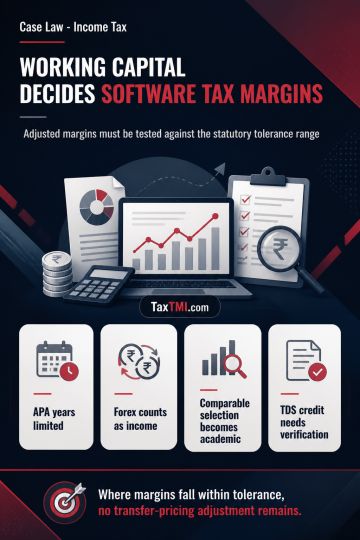
Working-capital adjustment determines whether software-services transfer-pricing margins fall within the statutory tolerance range, eliminating any ad...
Permanent establishment deductions upheld for expatriate salaries, direct costs and trading losses, while head-office costs require fresh classificati...
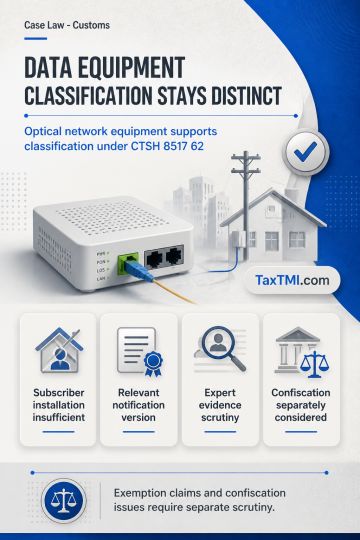
Data transmission equipment classification under CTSH 8517 62 remains distinct from residual classification, with exemption evidence requiring scrutin...
The HC struck down para 2(2) of Circular No. 181/13/2022-GST dated 10.11.2022 as ultra vires Section 54 of the GST Act and violative of Article 14 of the Constitution. The circular had improperly applied restrictions from the 13.7.2022 notification to all refund applications filed after 13.7.2022, even for periods predating the notification. The Court found this created an arbitrary and discriminatory classification among assessees based solely on filing date, despite applications being within the statutory limitation period. Following its precedent in Ascent Meditech, the HC ruled that such artificial classification was impermissible, particularly as the notification itself had prospective effect commencing July 18, 2022. Petition allowed.
The HC struck down para 2(2) of Circular No. 181/13/2022-GST dated 10.11.2022 as ultra vires Section 54 of the GST Act and violative of Article 14 of the Constitution. The circular had improperly applied restrictions from the 13.7.2022 notification to all refund applications filed after 13.7.2022, even for periods predating the notification. The Court found this created an arbitrary and discriminatory classification among assessees based solely on filing date, despite applications being within the statutory limitation period. Following its precedent in Ascent Meditech, the HC ruled that such artificial classification was impermissible, particularly as the notification itself had prospective effect commencing July 18, 2022. Petition allowed.
Note: It is a system-generated summary and is for quick reference only.
 TaxTMI
 of 4801












 Join Channel


 TaxTMI