Cross-examination rights and corroborated evidence limit customs penalties for misdeclaration in genuine import transactions involving documented clea...
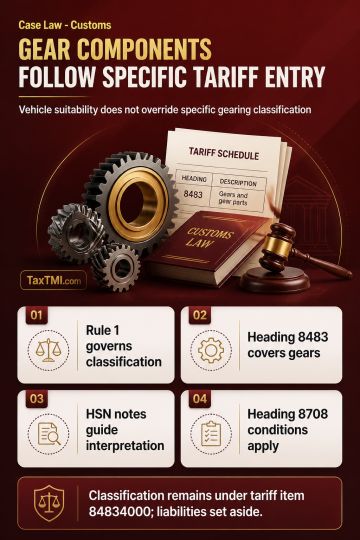
Tariff classification of vehicle gear components follows the specific gearing entry, displacing motor-vehicle parts classification and related liabili...
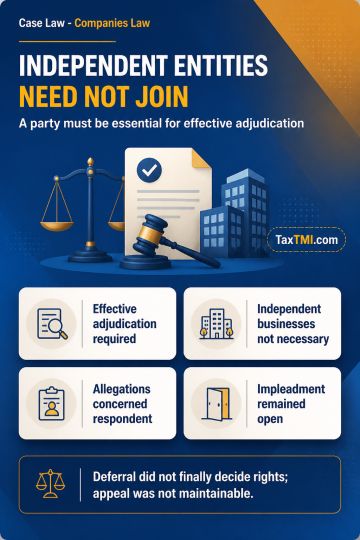
Necessary-party requirements limit impleadment of independent entities, while deferred consideration does not create an appealable adverse determinati...
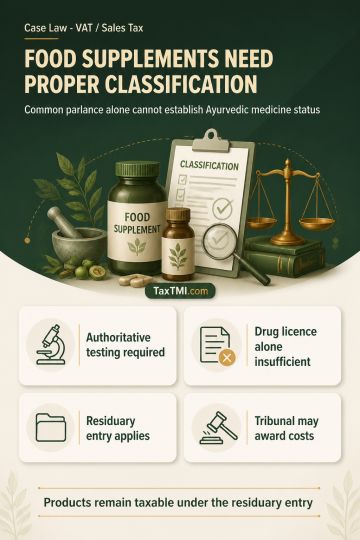
Food supplement classification requires common parlance and authoritative tests, preventing treatment as proprietary Ayurvedic medicines without suppo...
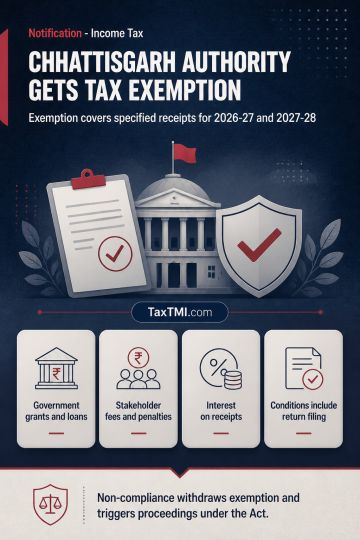
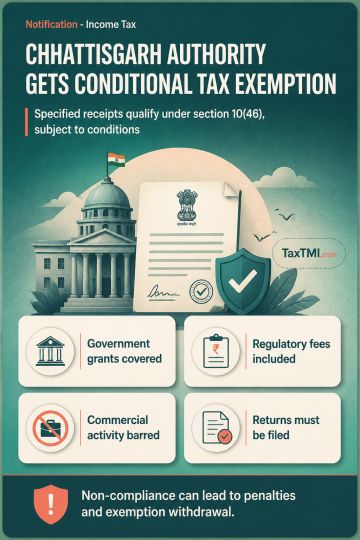
Specified regulatory authority income receives conditional tax exemption, subject to non-commercial activity, unchanged income character, and return f...
Tax exemption for regulatory authority income applies retrospectively, subject to non-commercial activity, unchanged income sources, and return-filing...
HC dismissed petition challenging lower court's order allowing respondent to summon GST Department witness. Court held that since GST records were not in respondent's possession, they could rightfully request witness testimony, subject to Rs. 3,000/- costs. The principle of plaintiff's burden of proof was upheld, affirming their discretion to determine necessary witnesses and documentation. While irrelevant evidence would be disregarded, the Court maintained that plaintiffs cannot be denied their right to present their case as they deem appropriate during the evidentiary stage. The ruling emphasizes procedural fairness in evidence gathering despite potential relevancy concerns.
HC dismissed petition challenging lower court's order allowing respondent to summon GST Department witness. Court held that since GST records were not in respondent's possession, they could rightfully request witness testimony, subject to Rs. 3,000/- costs. The principle of plaintiff's burden of proof was upheld, affirming their discretion to determine necessary witnesses and documentation. While irrelevant evidence would be disregarded, the Court maintained that plaintiffs cannot be denied their right to present their case as they deem appropriate during the evidentiary stage. The ruling emphasizes procedural fairness in evidence gathering despite potential relevancy concerns.
Note: It is a system-generated summary and is for quick reference only.
 TaxTMI
 of 4798








 Join Channel


 TaxTMI