Transfer pricing and tax deductions upheld on established principles, while employee contributions and warranty provisions returned for fresh examinat...
Captive transfer pricing relies on industrial consumer tariffs, while genuine quotations can benchmark effluent treatment transfers under the Other Me...
Specific tariff classification for ophthalmic instruments and extended limitation principles determine the treatment of duty demands, confiscation, an...
Integrated golf function determines classification, placing launch monitors and simulators under other golf equipment rather than measuring instrument...
Public servant status under anti-corruption law extends to recognised stock exchange leadership; constitutional and sanction challenges do not succeed...
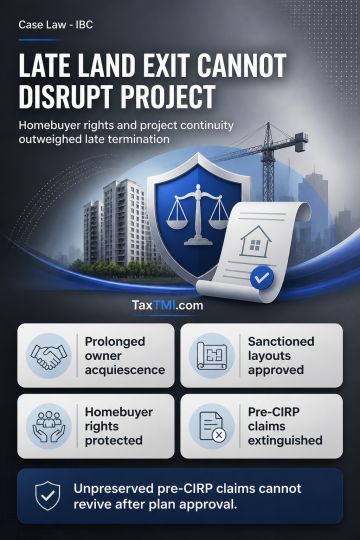
Acquiescence, homebuyer protection and clean-slate resolution principles prevent landowners from disrupting an integrated project through late termina...
Central GST authorities issued summons following a search operation, despite ongoing State GST proceedings. The HC held that statutory prohibition against parallel proceedings under Sections 73 and 74 specifically pertains to assessment proceedings, not investigative actions. Search-based summons are distinct from assessment proceedings as they aim to gather information potentially unavailable during original assessment. The Court distinguished between assessment proceedings and investigative measures, noting that Section 6(2)(b) applies to interrelated events in a particular chain. Since the search occurred after previous assessments, it constitutes a separate proceeding. The summons were deemed valid as investigative tools that may lead to future proceedings. Petition challenging the validity of CGST summons dismissed.
Central GST authorities issued summons following a search operation, despite ongoing State GST proceedings. The HC held that statutory prohibition against parallel proceedings under Sections 73 and 74 specifically pertains to assessment proceedings, not investigative actions. Search-based summons are distinct from assessment proceedings as they aim to gather information potentially unavailable during original assessment. The Court distinguished between assessment proceedings and investigative measures, noting that Section 6(2)(b) applies to interrelated events in a particular chain. Since the search occurred after previous assessments, it constitutes a separate proceeding. The summons were deemed valid as investigative tools that may lead to future proceedings. Petition challenging the validity of CGST summons dismissed.
Note: It is a system-generated summary and is for quick reference only.
 TaxTMI
 of 4805




















 Join Channel


 TaxTMI