Transaction value rejection requires reliable corroboration; refundable VAT is excluded and temporary registration does not defeat new-vehicle exempti...
Appellate jurisdiction remains available where a wrist-worn gold ornament cannot conclusively be characterised as imported baggage at the preliminary ...
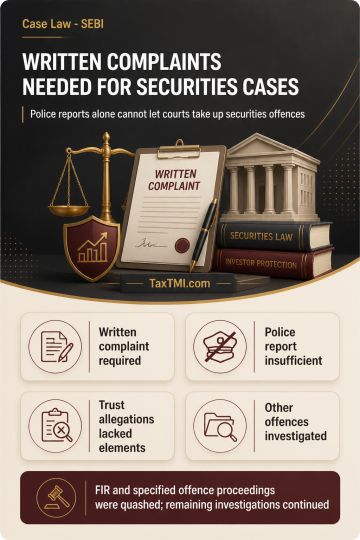
Written complaint requirement bars cognizance on police reports for securities offences, while unsupported breach of trust and cheating allegations fa...
Risk-based postal import clearance standardises electronic assessment, document requests, duty realisation and delivery controls at Foreign Post Offic...
Page of 4794
Press 'Enter' after typing page number.
221 to 240 of 95875 Results
❮
❯
❯❯
0 / 200
Expand Note
Add to Folder
No Folders have been created
+
Are you sure you want to delete "My most important" ?
Central GST authorities issued summons following a search operation, despite ongoing State GST proceedings. The HC held that statutory prohibition against parallel proceedings under Sections 73 and 74 specifically pertains to assessment proceedings, not investigative actions. Search-based summons are distinct from assessment proceedings as they aim to gather information potentially unavailable during original assessment. The Court distinguished between assessment proceedings and investigative measures, noting that Section 6(2)(b) applies to interrelated events in a particular chain. Since the search occurred after previous assessments, it constitutes a separate proceeding. The summons were deemed valid as investigative tools that may lead to future proceedings. Petition challenging the validity of CGST summons dismissed.
Central GST authorities issued summons following a search operation, despite ongoing State GST proceedings. The HC held that statutory prohibition against parallel proceedings under Sections 73 and 74 specifically pertains to assessment proceedings, not investigative actions. Search-based summons are distinct from assessment proceedings as they aim to gather information potentially unavailable during original assessment. The Court distinguished between assessment proceedings and investigative measures, noting that Section 6(2)(b) applies to interrelated events in a particular chain. Since the search occurred after previous assessments, it constitutes a separate proceeding. The summons were deemed valid as investigative tools that may lead to future proceedings. Petition challenging the validity of CGST summons dismissed.
Note: It is a system-generated summary and is for quick reference only.
 TaxTMI
 of 4794










 Join Channel


 TaxTMI