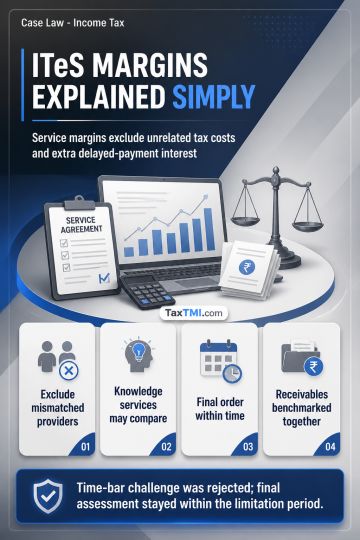
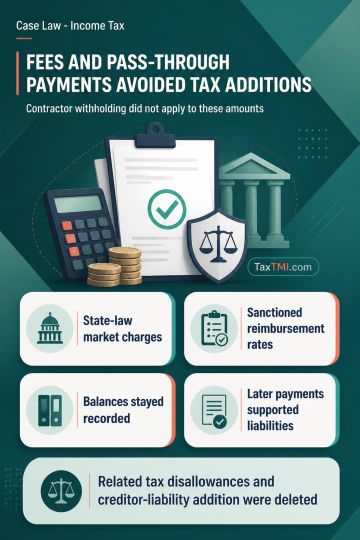
Transfer-pricing treatment of ITeS margins excludes pass-through tax recoveries and separate delayed-receivables interest after working-capital adjust...
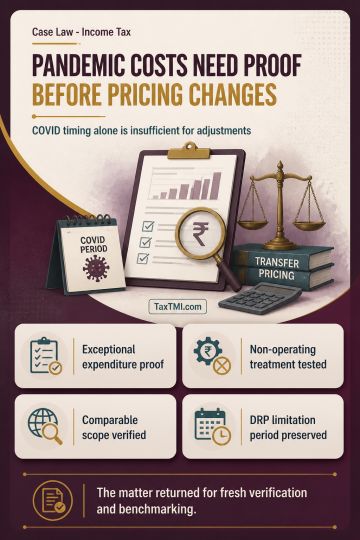
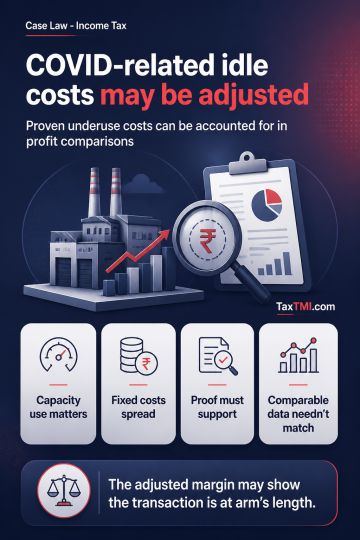
Capacity-utilisation adjustments under TNMM can neutralise substantiated COVID-related idle costs where underutilisation materially affects profitabil...
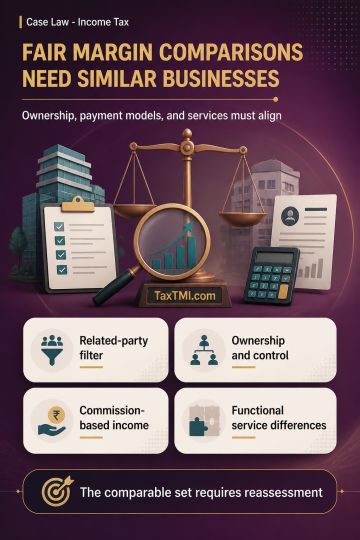
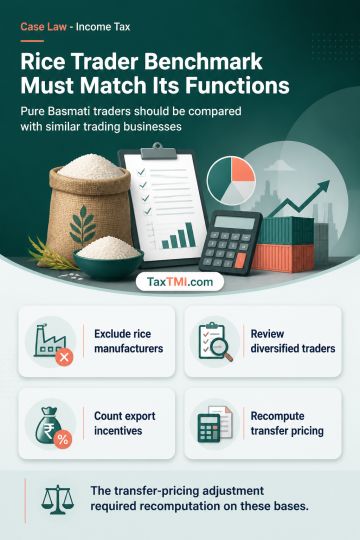
TNMM functional comparability requires excluding rice manufacturers from a pure Basmati rice trader's benchmark and recognising operating export recei...
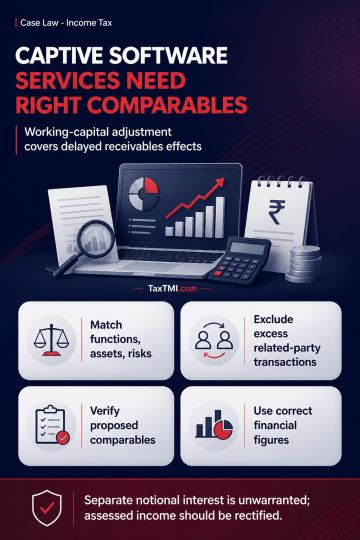
Working-capital adjustment subsumes delayed-receivable effects in TNMM benchmarking of captive software-development services, avoiding separate notion...
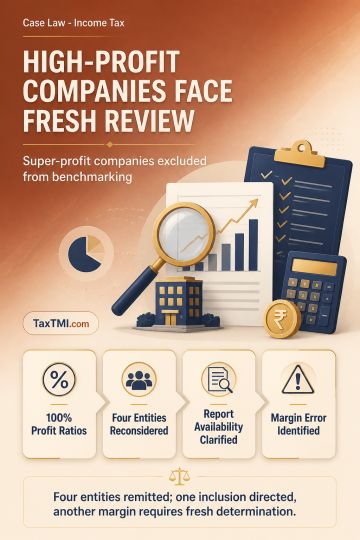
Transfer-pricing comparability requires exclusion of financially illogical super-profit comparables and correction of unsupported annual-report and ma...
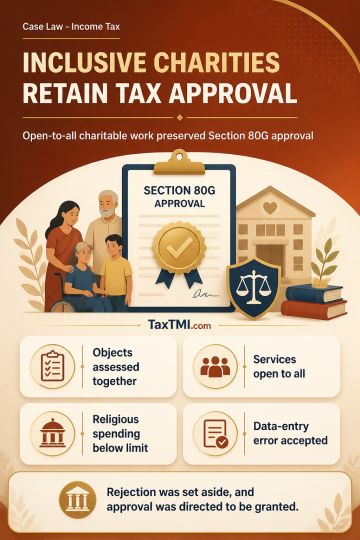
Charitable character assessment preserves Section 80G approval despite inclusive spiritual teachings and incidental religious expenditure within the s...
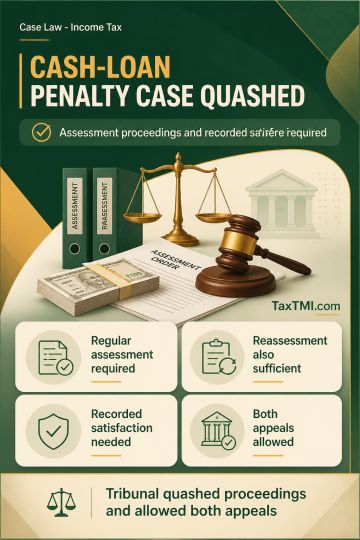
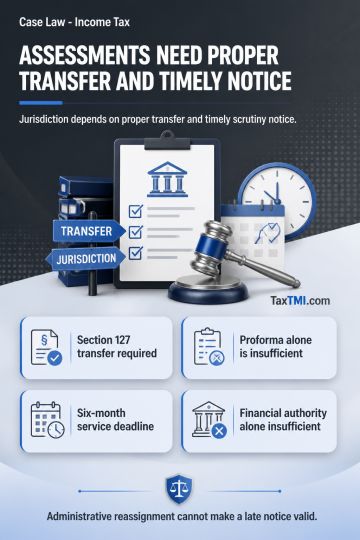
Penalty proceedings for cash-loan acceptance require assessment proceedings and recorded Assessing Officer satisfaction; absent these, the proceedings...
Page of 4828
Press 'Enter' after typing page number.
161 to 180 of 96556 Results
❮
❯
❯❯
0 / 200
Expand Note
Add to Folder
No Folders have been created
+
Are you sure you want to delete "My most important" ?
AAR ruled PVC raincoats must be classified under HSN 3926 20 (plastic articles) rather than HSN 6201 (textile garments), attracting 18% GST. Though raincoats function as garments/apparel in common usage, their primary composition of polyvinyl chloride (PVC) determines classification. The authority rejected applicant's argument for textile classification, noting PVC sheets cannot be considered woven fabric or textile material. Following the principle of generalia specialibus non derogant, the specific material composition prevails over general garment usage. The ruling confirmed applicability of Schedule-III Entry 111 of GST notifications, regardless of the raincoat's price point, maintaining 18% rate uniformly.
AAR ruled PVC raincoats must be classified under HSN 3926 20 (plastic articles) rather than HSN 6201 (textile garments), attracting 18% GST. Though raincoats function as garments/apparel in common usage, their primary composition of polyvinyl chloride (PVC) determines classification. The authority rejected applicant's argument for textile classification, noting PVC sheets cannot be considered woven fabric or textile material. Following the principle of generalia specialibus non derogant, the specific material composition prevails over general garment usage. The ruling confirmed applicability of Schedule-III Entry 111 of GST notifications, regardless of the raincoat's price point, maintaining 18% rate uniformly.
Note: It is a system-generated summary and is for quick reference only.
 TaxTMI
  TaxTMI
 of 4828



 Join Channel