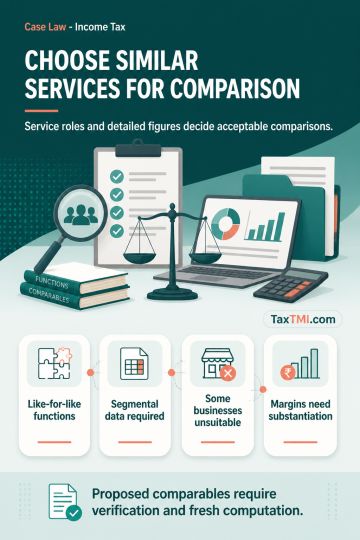
Functional comparability governs selection of support-service and IT-enabled service comparables, with verification required for unresolved data and m...
Bank account freezing requires statutory authority; anti-money-laundering compliance and KYC monitoring do not permit unilateral indefinite restrictio...
HC held that cross-objections are not maintainable under Section 260A of the Act absent specific statutory recognition, unlike Section 253(4). A respondent's right under Section 260A(6)(b) is limited to advancing contentions on adverse Tribunal findings only if they are intrinsically connected to the substantial question of law in the admitted appeal. The provision is merely enabling and does not confer an independent right to raise challenges disconnected from the admitted question. While respondents may support ultimate decisions by pressing connected issues decided against them without separate cross-objections, they must pursue appropriate appellate remedies for unconnected grievances rather than filing cross-objections.
HC held that cross-objections are not maintainable under Section 260A of the Act absent specific statutory recognition, unlike Section 253(4). A respondent's right under Section 260A(6)(b) is limited to advancing contentions on adverse Tribunal findings only if they are intrinsically connected to the substantial question of law in the admitted appeal. The provision is merely enabling and does not confer an independent right to raise challenges disconnected from the admitted question. While respondents may support ultimate decisions by pressing connected issues decided against them without separate cross-objections, they must pursue appropriate appellate remedies for unconnected grievances rather than filing cross-objections.
Note: It is a system-generated summary and is for quick reference only.
 TaxTMI
  TaxTMI
 of 4828







 Join Channel