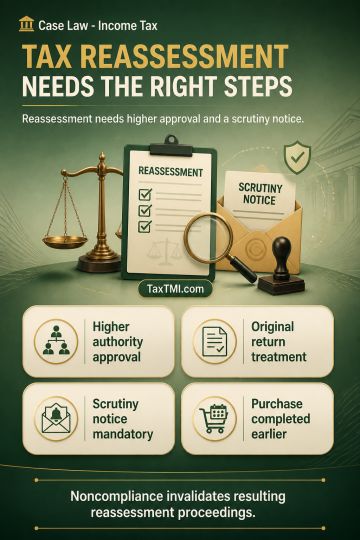
Opportunity to furnish unsecured-loan confirmations is required before reassessment initiation; proceedings require fresh consideration after taxpayer...
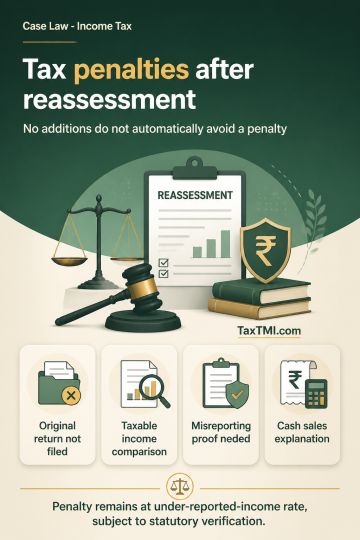
Under-reporting on a first reassessment return attracts penalty, while enhanced misreporting penalty requires proof of a statutory misreporting catego...
Form 26AS evidence requires successor-entity accounting verification after business transfer, while invoice-supported related-party advertising expend...
ITAT upheld CIT(A)'s decision confirming assessee's liability to collect TCS on compounding fees received from illegal miners and transporters of minerals. The tribunal determined that since the assessee received payments equivalent to 10 times the normal royalty amount from unauthorized operators, they were obligated to collect TCS under Section 206C. The assessee's argument against TCS applicability was rejected as lacking substance. Having failed to collect required TCS, the assessee was correctly designated as 'assessee-in-default' under Section 206C(6). The tribunal affirmed the lower authorities' interpretation, noting consistency with previous rulings on identical issues regarding mineral royalty collection and TCS obligations.
ITAT upheld CIT(A)'s decision confirming assessee's liability to collect TCS on compounding fees received from illegal miners and transporters of minerals. The tribunal determined that since the assessee received payments equivalent to 10 times the normal royalty amount from unauthorized operators, they were obligated to collect TCS under Section 206C. The assessee's argument against TCS applicability was rejected as lacking substance. Having failed to collect required TCS, the assessee was correctly designated as 'assessee-in-default' under Section 206C(6). The tribunal affirmed the lower authorities' interpretation, noting consistency with previous rulings on identical issues regarding mineral royalty collection and TCS obligations.
Note: It is a system-generated summary and is for quick reference only.
 TaxTMI
  TaxTMI
 of 4920