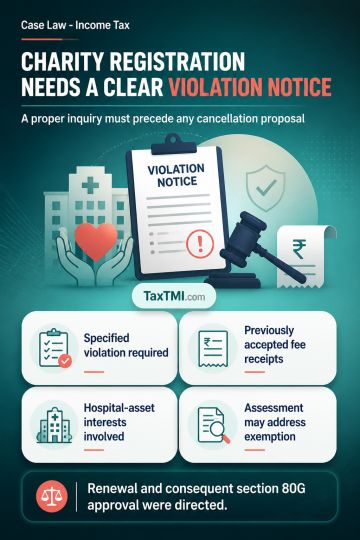
Charitable trust registration requires a specified-violation notice; settled cash deposits and related-party payments did not justify cancellation or ...
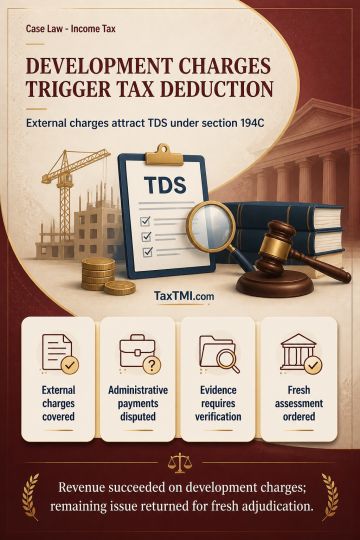
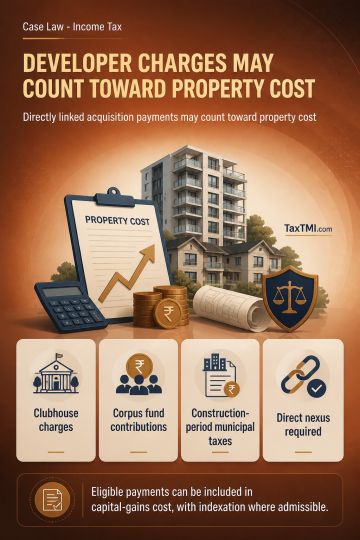
External development charges trigger TDS under section 194C, while disputed administrative payments require factual verification and fresh adjudicatio...
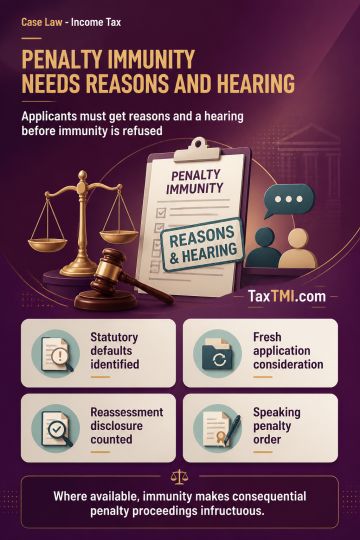
Section 270AA penalty immunity requires identified statutory defaults and a hearing before rejection; reassessment disclosure may constitute under-rep...
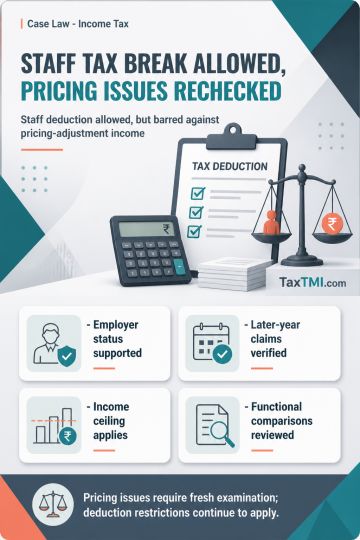
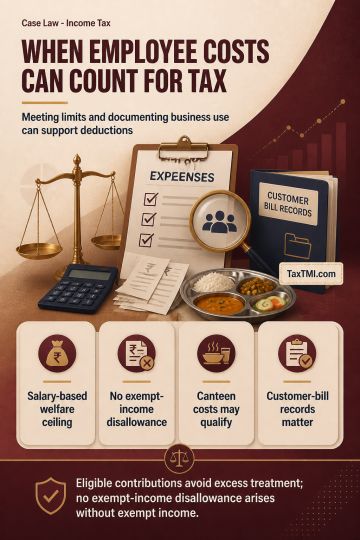
Section 80JJAA employee-cost deduction allowed for deployed staff but barred against transfer-pricing income enhancement, with pricing issues remanded...
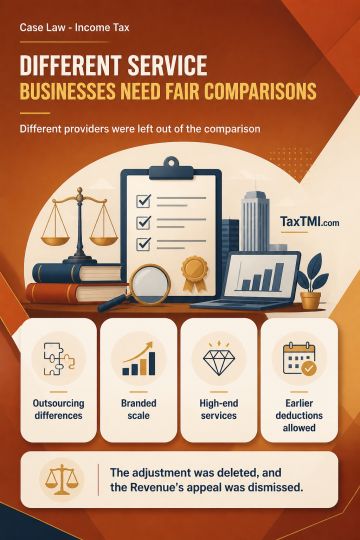
Transfer-pricing methodology protects commercially genuine associated-enterprise payments, while pre-2016 secondary adjustments and related notional i...
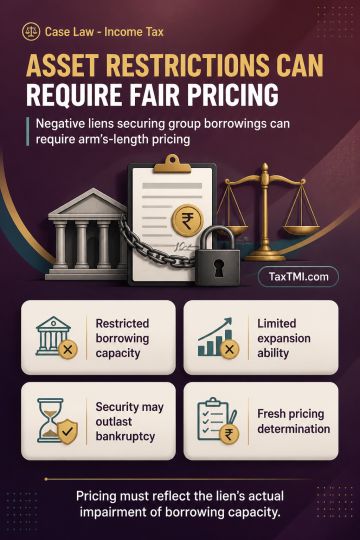
Negative liens over operating assets can constitute international transactions requiring arm's-length pricing reflecting restricted borrowing and expa...
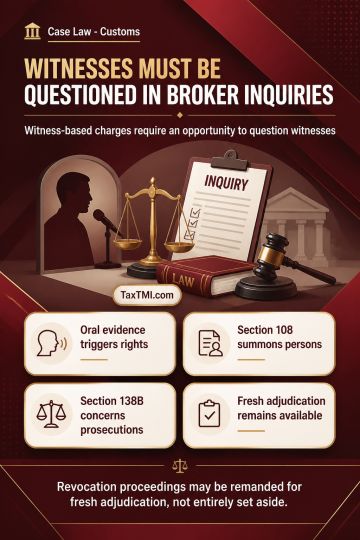
Cross-examination rights in Customs Broker revocation inquiries require witness examination; procedural denial may be cured through fresh adjudication...
The Income Tax Bill, 2025 introduces substantial reforms to perquisite taxation, establishing a uniform Rs. 7.5 lakh limit for aggregate employer contributions across funds. Key modifications include consolidation of rent-free and concessional accommodation provisions, streamlined treatment of director/employee benefits, and removal of specific monetary thresholds in favor of prescribed amounts. Medical benefit exemptions are retained for employer-maintained and approved hospitals while eliminating previous reimbursement ceilings. The legislation modernizes compliance through simplified valuation guidelines, standardized contribution limits, and integrated explanations within main provisions. Notable structural changes include removal of detailed computation methods for accommodation benefits and introduction of streamlined annual accretion calculations, representing significant administrative simplification while maintaining core tax principles.
The Income Tax Bill, 2025 introduces substantial reforms to perquisite taxation, establishing a uniform Rs. 7.5 lakh limit for aggregate employer contributions across funds. Key modifications include consolidation of rent-free and concessional accommodation provisions, streamlined treatment of director/employee benefits, and removal of specific monetary thresholds in favor of prescribed amounts. Medical benefit exemptions are retained for employer-maintained and approved hospitals while eliminating previous reimbursement ceilings. The legislation modernizes compliance through simplified valuation guidelines, standardized contribution limits, and integrated explanations within main provisions. Notable structural changes include removal of detailed computation methods for accommodation benefits and introduction of streamlined annual accretion calculations, representing significant administrative simplification while maintaining core tax principles.
Note: It is a system-generated summary and is for quick reference only.
 TaxTMI
  TaxTMI
 of 4828











 Join Channel


