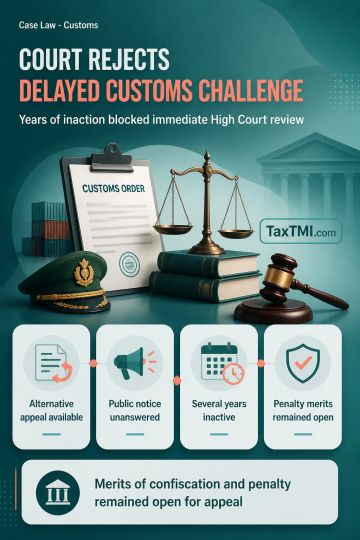
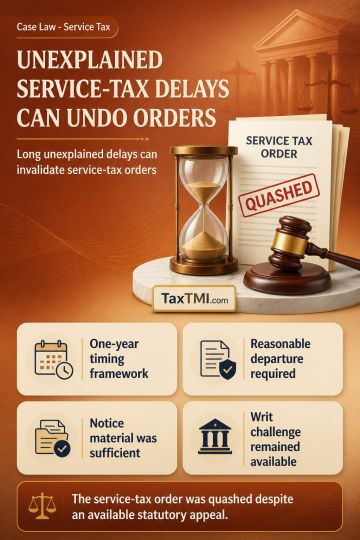
Alternative statutory remedy and unexplained delay barred writ review of customs confiscation adjudication, leaving merits for appellate consideration...
Authorised courier due diligence protects against penalties where declared exports conceal prohibited goods despite proper documentation and customs p...
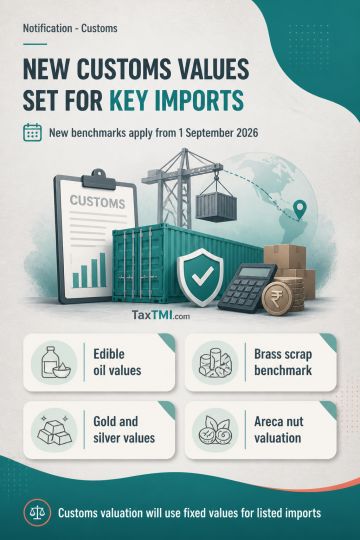
Customs-controlled container movement now extends to DP World facilities, subject to segregation, inspections, reconciliation, and EXIM cargo priority...
Comparative analysis of expenditure disallowance provisions between Income Tax Bill 2025 and Income Tax Act 1961 reveals significant modernization while maintaining core principles. The 2025 Bill restructures Section 14A with clearer language, replacing "Notwithstanding" with "Irrespective of" and streamlining the Assessment Officer's powers into two distinct scenarios. Key changes include removal of reassessment provisions, elimination of retrospective application clause, and adoption of simplified terminology using "tax year." The Bill enhances administrative efficiency by maintaining fundamental disallowance principles while reducing interpretational ambiguity through more direct language and clearer structuring. Notable omissions include specific references to Sections 147 and 154, and the removal of the Explanation section, indicating a shift toward prospective application.
Comparative analysis of expenditure disallowance provisions between Income Tax Bill 2025 and Income Tax Act 1961 reveals significant modernization while maintaining core principles. The 2025 Bill restructures Section 14A with clearer language, replacing "Notwithstanding" with "Irrespective of" and streamlining the Assessment Officer's powers into two distinct scenarios. Key changes include removal of reassessment provisions, elimination of retrospective application clause, and adoption of simplified terminology using "tax year." The Bill enhances administrative efficiency by maintaining fundamental disallowance principles while reducing interpretational ambiguity through more direct language and clearer structuring. Notable omissions include specific references to Sections 147 and 154, and the removal of the Explanation section, indicating a shift toward prospective application.
Note: It is a system-generated summary and is for quick reference only.
 TaxTMI
  TaxTMI
 of 4828















 Join Channel


