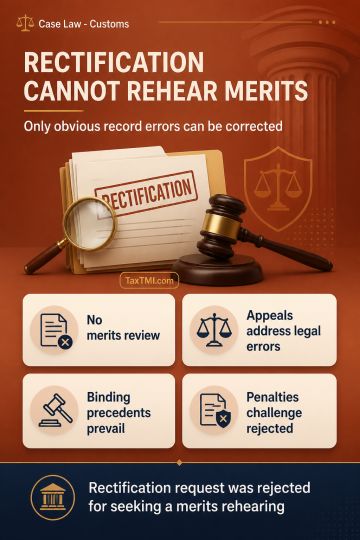
Rectification of mistake remains limited to self-evident record errors, preventing merits review through miscellaneous applications and preserving fin...
Tender creditworthiness conditions may extend to de facto Promoter Directors, with post-participation challenges generally barred absent arbitrariness...
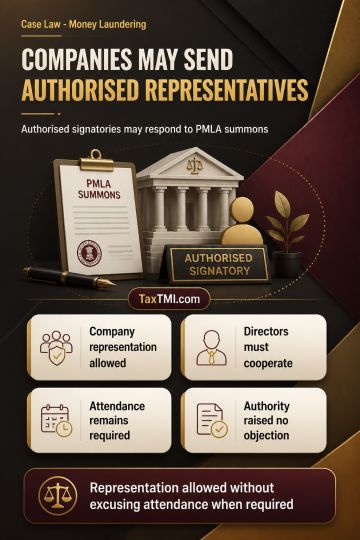
Corporate representation in PMLA summons proceedings permitted through an authorised signatory, subject to directors' continuing cooperation and atten...
Helicopter charter classification requires effective control analysis, while territorial performance, reasoned credit orders and wilful suppression de...
Specified fund definition expands PAN exemption eligibility for registered alternative investment funds and qualifying International Financial Service...
Tax exemption for specified legal-services authority income applies retrospectively, subject to non-commercial activity, unchanged income sources, and...
The provisions govern taxation of capital assets or stock-in-trade transfers during entity dissolution or reconstitution. Under both Sec 9B of IT Act 1961 and Cl 8 of IT Bill 2025, such transfers are deemed taxable events with fair market value as consideration. Cl 8 introduces refinements including a two-year limitation for guidelines issuance, 30-day parliamentary review, and modified terminology from "previous year" to "tax year." The framework requires specified entities to recognize deemed transfers in distribution year, compute gains on FMV basis, and subjects proceeds to business income or capital gains tax. Specified persons must document received assets and consider FMV implications. While core principles remain unchanged, Cl 8 enhances administrative procedures and oversight mechanisms for implementation effectiveness.
The provisions govern taxation of capital assets or stock-in-trade transfers during entity dissolution or reconstitution. Under both Sec 9B of IT Act 1961 and Cl 8 of IT Bill 2025, such transfers are deemed taxable events with fair market value as consideration. Cl 8 introduces refinements including a two-year limitation for guidelines issuance, 30-day parliamentary review, and modified terminology from "previous year" to "tax year." The framework requires specified entities to recognize deemed transfers in distribution year, compute gains on FMV basis, and subjects proceeds to business income or capital gains tax. Specified persons must document received assets and consider FMV implications. While core principles remain unchanged, Cl 8 enhances administrative procedures and oversight mechanisms for implementation effectiveness.
Note: It is a system-generated summary and is for quick reference only.
 TaxTMI
 of 4788














 Join Channel


 TaxTMI