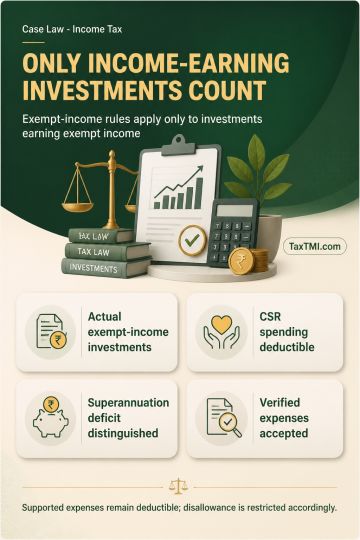
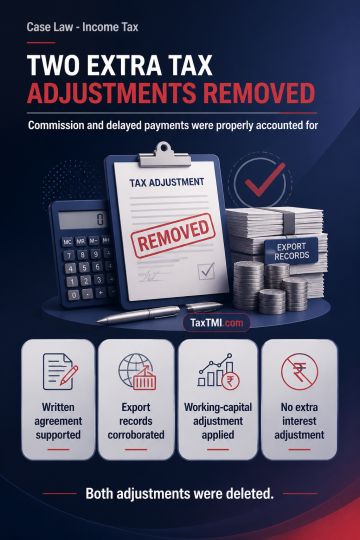
Exempt-income expenditure disallowance is confined to investments that actually generated exempt income, while supported business expenses remain dedu...
Objective characteristics and principal use govern mining-tyre classification, while fresh advance ruling applications may rely on additional technica...
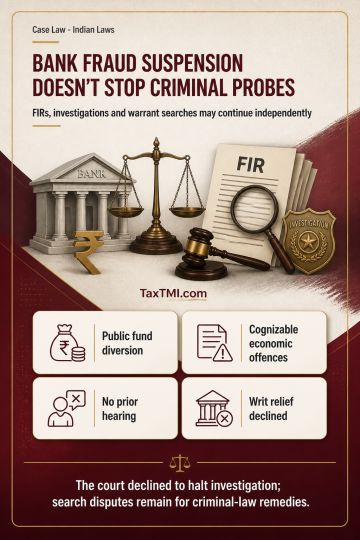
Administrative fraud classification suspension does not halt independent criminal investigation or warrant-based searches into alleged economic offenc...
HC allowed petition challenging appellate order under Section 107 of 2017 Act, finding that Appellate Authority failed to judiciously exercise discretionary power regarding delay condonation. Petitioner demonstrated sufficient cause for 3-day delay in filing appeal, citing Managing Director's travel. The delay fell within condonable period under Section 107(4). Authority erred by not examining whether delay was condonable and if sufficient cause existed. HC condoned delay, noting it was within prescribed statutory period and backed by reasonable justification. Matter remanded to Appellate Authority for consideration on merits.
HC allowed petition challenging appellate order under Section 107 of 2017 Act, finding that Appellate Authority failed to judiciously exercise discretionary power regarding delay condonation. Petitioner demonstrated sufficient cause for 3-day delay in filing appeal, citing Managing Director's travel. The delay fell within condonable period under Section 107(4). Authority erred by not examining whether delay was condonable and if sufficient cause existed. HC condoned delay, noting it was within prescribed statutory period and backed by reasonable justification. Matter remanded to Appellate Authority for consideration on merits.
Note: It is a system-generated summary and is for quick reference only.
 TaxTMI
 of 4801











 Join Channel


 TaxTMI