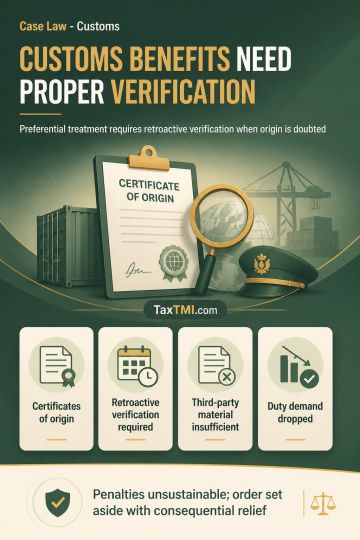
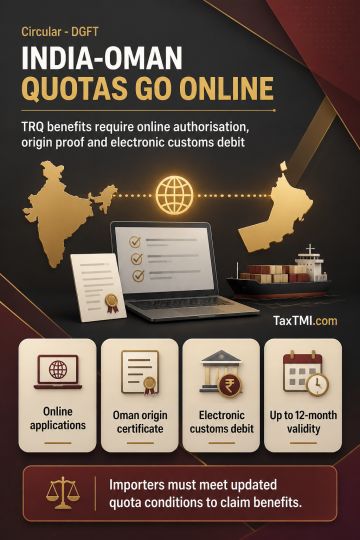
Certificate-of-origin verification procedure governs preferential customs benefits; denial without retroactive verification was set aside with consequ...
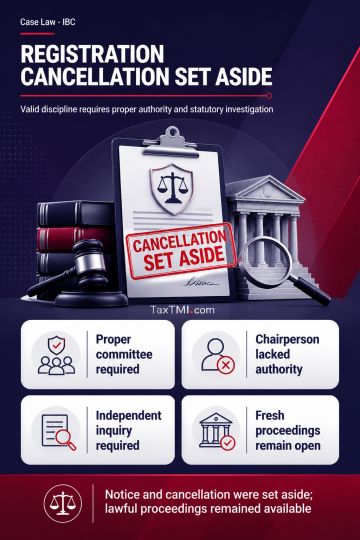
Disciplinary Committee jurisdiction and mandatory investigation requirements invalidated cancellation of an insolvency professional's registration and...
Retention of seized property survives where recorded reasons support proceeds of crime, while stayed investigation periods are excluded from limitatio...
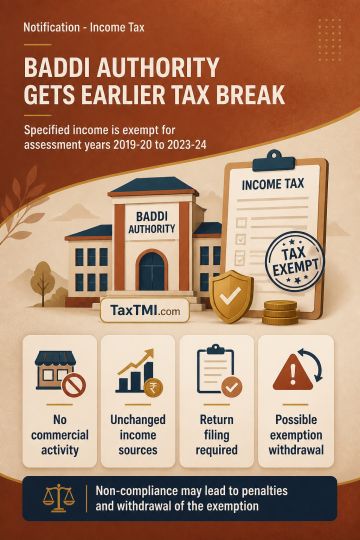
Specified income of Baddi Barotiwala Nalagarh Development Authority receives conditional tax exemption, retrospectively covering its designated assess...
Specified development authority income receives retrospective tax exemption, subject to non-commercial activity, unchanged income sources, and return-...
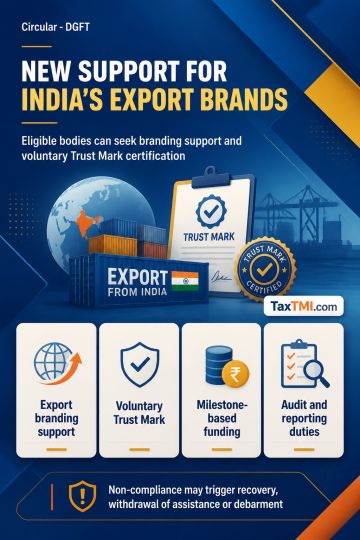
Unified Brand India framework introduces voluntary Trust Mark certification and funding support for export branding, packaging and global promotional ...
HC held that concessional CVD rate under Notification No.4/2006-CE was incorrectly granted. The importer violated key conditions by: (1) purchasing through high-sea sale from third party instead of directly from manufacturer, (2) failing to meet manufacturing mode and capacity requirements, and (3) misusing imported cement for manufacturing ash bricks and local market sales instead of declared institutional/industrial purposes. Mere inclusion of manufacturer details in Bill of Entry and customs clearance were insufficient to justify concessional rate. The court emphasized that high-sea sales through intermediaries negate direct manufacturer purchase requirement. Original order upheld, denying concessional CVD benefit to importer due to multiple notification violations.
HC held that concessional CVD rate under Notification No.4/2006-CE was incorrectly granted. The importer violated key conditions by: (1) purchasing through high-sea sale from third party instead of directly from manufacturer, (2) failing to meet manufacturing mode and capacity requirements, and (3) misusing imported cement for manufacturing ash bricks and local market sales instead of declared institutional/industrial purposes. Mere inclusion of manufacturer details in Bill of Entry and customs clearance were insufficient to justify concessional rate. The court emphasized that high-sea sales through intermediaries negate direct manufacturer purchase requirement. Original order upheld, denying concessional CVD benefit to importer due to multiple notification violations.
Note: It is a system-generated summary and is for quick reference only.
 TaxTMI
 of 4803









 Join Channel


 TaxTMI