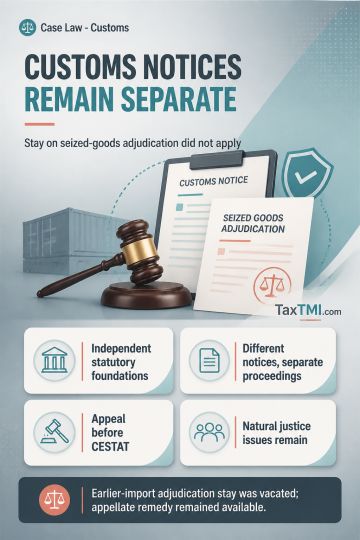
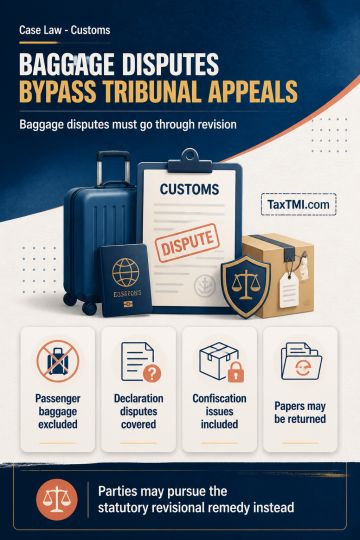
Independent show-cause notices remain separate proceedings, while customs adjudication challenges should ordinarily follow the statutory appellate rem...
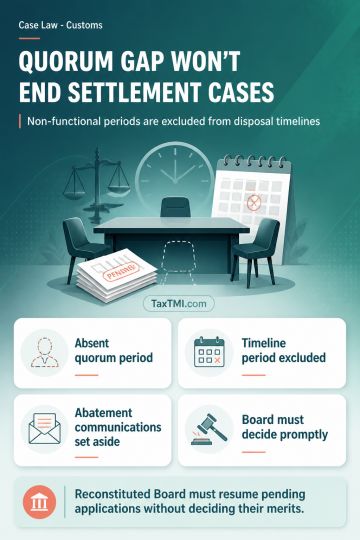
Institutional incapacity in customs settlement proceedings excludes non-functional quorum periods from statutory disposal timelines, preventing automa...
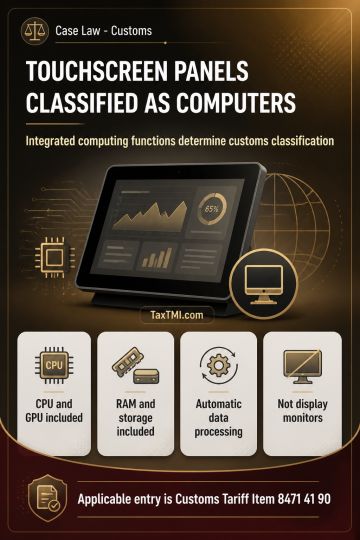
Interactive touchscreen panels with integrated computing functions fall under automatic data-processing machines rather than display monitors for cust...
Ex parte injunction service requirements were substantially met, while civil recovery and SFIO investigation into provident fund defalcation continued...
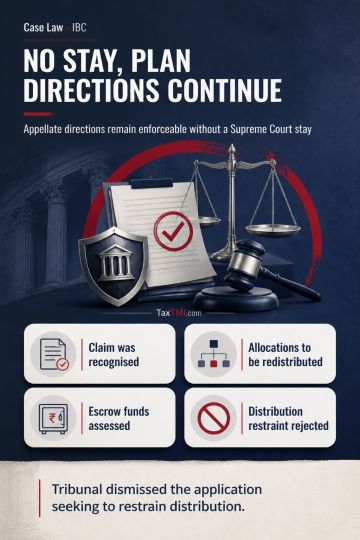
Enforcement of resolution-plan directions continues without a Supreme Court stay, preventing suspension of redistribution and escrowed-fund distributi...
Third-party ownership claims over attached property require Special Court adjudication where purchasers lack registered sale deeds and bona fides rema...
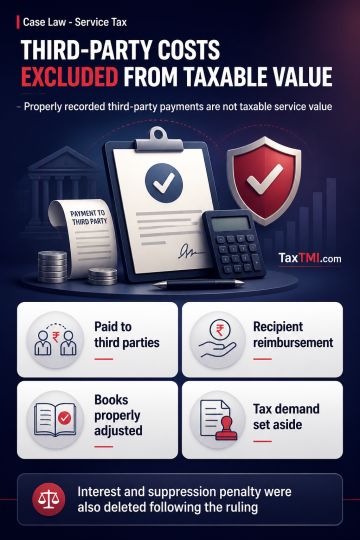
Pure-agent reimbursements in clearing and forwarding services are excluded from taxable value when qualifying third-party payments are properly record...
CESTAT ruled printed thermal paper ATM rolls are classifiable under Chapter 49 (CETH 49019900) as products of printing industry rather than Chapter 48 (CETH 48119099). The tribunal determined that printing on thermal rolls creates a distinct ATM roll product where the printed content (transaction details, instructions, logos) serves a primary rather than incidental purpose. The printed matter and blank portions constitute integrated elements serving informational purposes. Following precedents from similar cases involving thermal papers and printed materials, CESTAT held that when articles are printed, their primary purpose of conveying information makes them appropriately classifiable under heading 49.01. Appeal allowed in favor of the appellant.
CESTAT ruled printed thermal paper ATM rolls are classifiable under Chapter 49 (CETH 49019900) as products of printing industry rather than Chapter 48 (CETH 48119099). The tribunal determined that printing on thermal rolls creates a distinct ATM roll product where the printed content (transaction details, instructions, logos) serves a primary rather than incidental purpose. The printed matter and blank portions constitute integrated elements serving informational purposes. Following precedents from similar cases involving thermal papers and printed materials, CESTAT held that when articles are printed, their primary purpose of conveying information makes them appropriately classifiable under heading 49.01. Appeal allowed in favor of the appellant.
Note: It is a system-generated summary and is for quick reference only.
 TaxTMI
 of 4790











 Join Channel


 TaxTMI