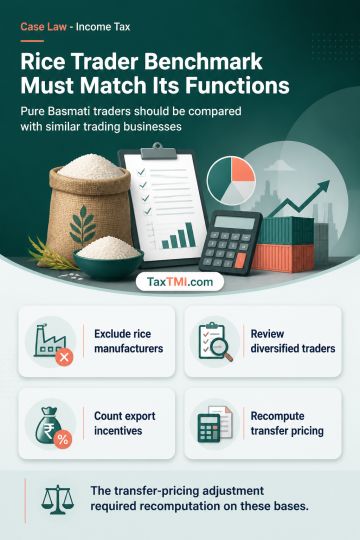
TNMM functional comparability requires excluding rice manufacturers from a pure Basmati rice trader's benchmark and recognising operating export recei...
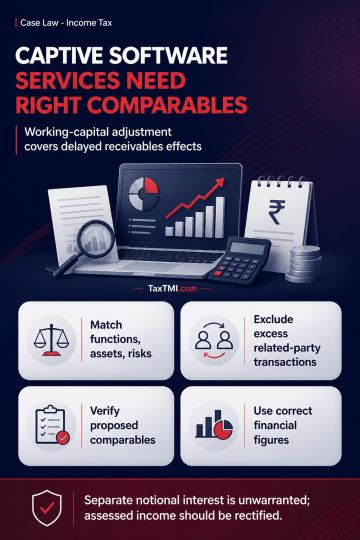
Working-capital adjustment subsumes delayed-receivable effects in TNMM benchmarking of captive software-development services, avoiding separate notion...
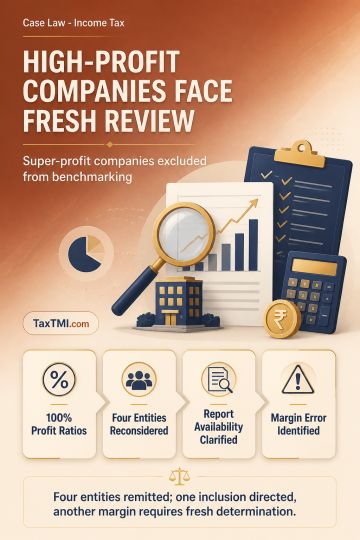
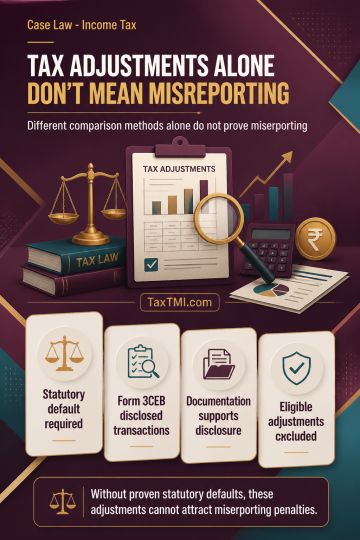
Transfer-pricing comparability requires exclusion of financially illogical super-profit comparables and correction of unsupported annual-report and ma...
Charitable character assessment preserves Section 80G approval despite inclusive spiritual teachings and incidental religious expenditure within the s...
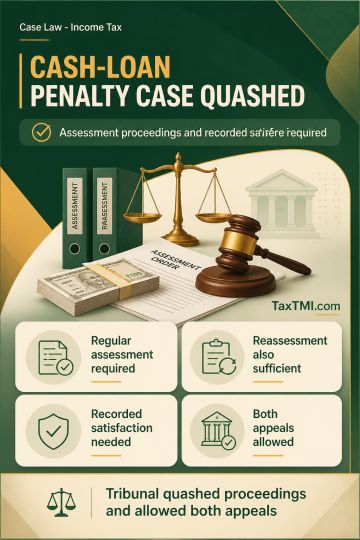
Penalty proceedings for cash-loan acceptance require assessment proceedings and recorded Assessing Officer satisfaction; absent these, the proceedings...
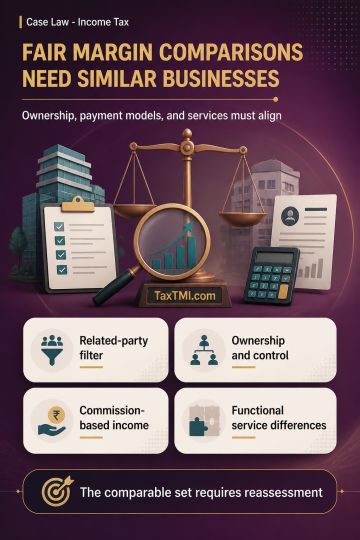
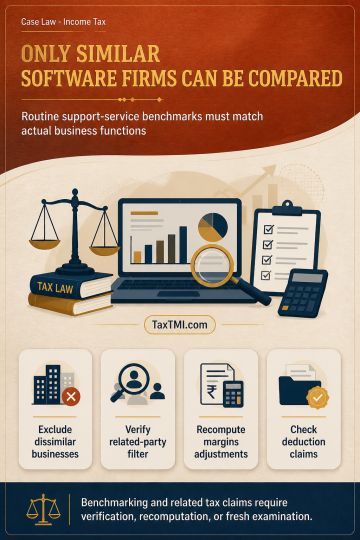
Functional comparability governs software-service benchmarking: dissimilar companies are excluded, while related-party filters, margins and working-ca...
HC held that rejection of eligibility certificates under Industrial Policy 2008 was unjustified. The conflicting assessments between Industries Department (claiming units non-functioning) and Finance Department (assessing operational turnover) demonstrated administrative inconsistency. Court applied doctrine of promissory estoppel, ruling government must honor policy promises relied upon by industrial units. The State Level Committee must reconsider eligibility applications since tax assessments proved units were operational. Finance Department's assessments during pending eligibility applications were procedurally improper. Court directed issuance of eligibility certificates and corresponding tax benefits, including necessary refunds and adjustments, to qualifying units that commenced production within policy period.
HC held that rejection of eligibility certificates under Industrial Policy 2008 was unjustified. The conflicting assessments between Industries Department (claiming units non-functioning) and Finance Department (assessing operational turnover) demonstrated administrative inconsistency. Court applied doctrine of promissory estoppel, ruling government must honor policy promises relied upon by industrial units. The State Level Committee must reconsider eligibility applications since tax assessments proved units were operational. Finance Department's assessments during pending eligibility applications were procedurally improper. Court directed issuance of eligibility certificates and corresponding tax benefits, including necessary refunds and adjustments, to qualifying units that commenced production within policy period.
Note: It is a system-generated summary and is for quick reference only.
 TaxTMI
  TaxTMI
 of 4830





 Join Channel


