Retention of seized property survives where recorded reasons support proceeds of crime, while stayed investigation periods are excluded from limitatio...
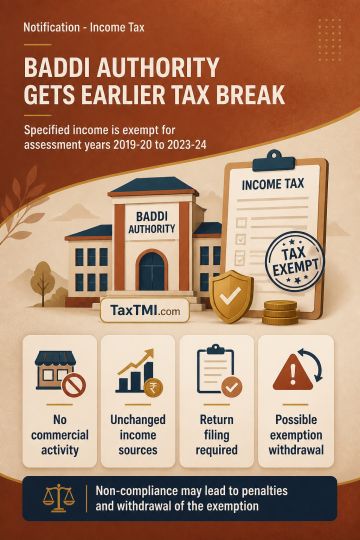
Specified income of Baddi Barotiwala Nalagarh Development Authority receives conditional tax exemption, retrospectively covering its designated assess...
Specified development authority income receives retrospective tax exemption, subject to non-commercial activity, unchanged income sources, and return-...
Unified Brand India framework introduces voluntary Trust Mark certification and funding support for export branding, packaging and global promotional ...
Origin Declaration authentication governs preferential tariff claims under India-UK CETA, requiring a validated reference number before import clearan...
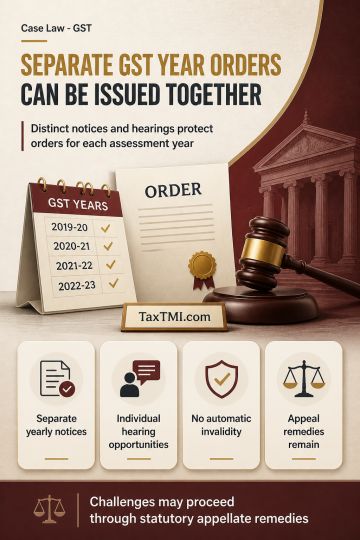
Separate assessment orders for different years remain valid when distinct notices and hearing opportunities prevent prejudice from combined proceeding...
ITAT ruled against penalty under Section 271D for alleged violation of Section 269SS regarding cash transactions in property transfer. The Tribunal held that while Section 269SS applies broadly to property transfers beyond simple buy-sell transactions, it targets actual recipients of funds, not intermediaries. The appellant, acting as a broker, merely facilitated payments between principals and wasn't the true recipient. Additionally, ITAT found reasonable cause under Section 273B, noting the relevant amendment to Section 269SS occurred after the transaction date. The appellant's limited education and role as middleman demonstrated absence of malafide intent. The Tribunal directed deletion of penalty, allowing the appeal.
ITAT ruled against penalty under Section 271D for alleged violation of Section 269SS regarding cash transactions in property transfer. The Tribunal held that while Section 269SS applies broadly to property transfers beyond simple buy-sell transactions, it targets actual recipients of funds, not intermediaries. The appellant, acting as a broker, merely facilitated payments between principals and wasn't the true recipient. Additionally, ITAT found reasonable cause under Section 273B, noting the relevant amendment to Section 269SS occurred after the transaction date. The appellant's limited education and role as middleman demonstrated absence of malafide intent. The Tribunal directed deletion of penalty, allowing the appeal.
Note: It is a system-generated summary and is for quick reference only.
 TaxTMI
 of 4805














 Join Channel


 TaxTMI
