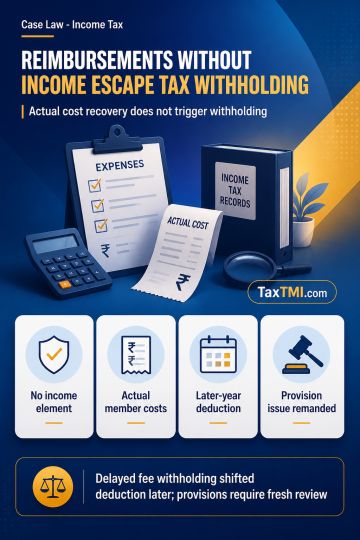
Pure reimbursement without income element escapes tax withholding, while delayed withholding and unsupported provisions face deferred or renewed scrut...
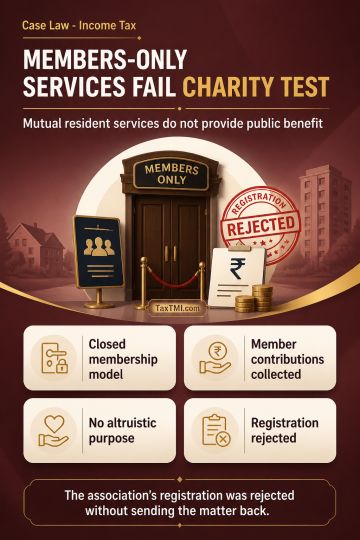
Public benefit requirement defeats charitable registration where residents' association services are reciprocal, member-only facilities governed by mu...
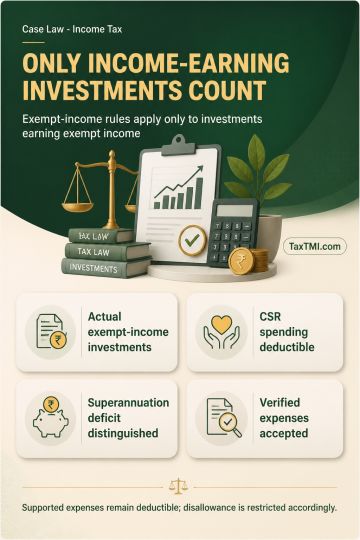
Exempt-income expenditure disallowance is confined to investments that actually generated exempt income, while supported business expenses remain dedu...
Objective characteristics and principal use govern mining-tyre classification, while fresh advance ruling applications may rely on additional technica...
ITAT ruled favorably on multiple issues for the banking assessee. The tribunal allowed deduction under s.36(1)(viia) for NPA provisions, holding them equivalent to provisions for bad and doubtful debts. For s.14A disallowance, matter was remanded to examine administrative expenses allocation despite interest-free funds exceeding investments. Deduction under s.36(1)(vii) was permitted following prior precedent. RBI penalty payment was deemed allowable under s.37 as not being for legal infraction. Interest on Innovative Perpetual Debt Instruments (IPDI) qualified for deduction under s.36(1)(iii), recognizing these hybrid instruments as legitimate business borrowings despite their perpetual nature and discretionary payout features. The ruling primarily followed established banking sector precedents and emphasized substance over form.
ITAT ruled favorably on multiple issues for the banking assessee. The tribunal allowed deduction under s.36(1)(viia) for NPA provisions, holding them equivalent to provisions for bad and doubtful debts. For s.14A disallowance, matter was remanded to examine administrative expenses allocation despite interest-free funds exceeding investments. Deduction under s.36(1)(vii) was permitted following prior precedent. RBI penalty payment was deemed allowable under s.37 as not being for legal infraction. Interest on Innovative Perpetual Debt Instruments (IPDI) qualified for deduction under s.36(1)(iii), recognizing these hybrid instruments as legitimate business borrowings despite their perpetual nature and discretionary payout features. The ruling primarily followed established banking sector precedents and emphasized substance over form.
Note: It is a system-generated summary and is for quick reference only.
 TaxTMI
 of 4803













 Join Channel


 TaxTMI
