Commercial vehicle depreciation, scientifically determined warranty provisions and exempt-income disallowances were resolved in favour of the taxpayer...
Inherited property sale proceeds require capital-gains treatment where ownership is supported by evidence, not suspicion or unverified signature doubt...
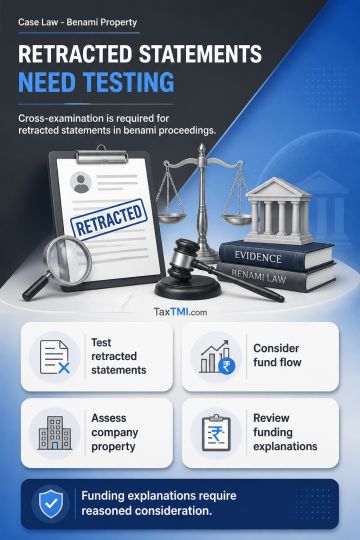
Cross-examination of retracted statements is essential where foundational evidence supports a benami allegation and documented funding explanations re...
Capital-goods exemption covers plant-modernisation accessories, while the import restriction applies only to earlier capital-goods components and spar...
ITAT ruled favorably on multiple issues for the banking assessee. The tribunal allowed deduction under s.36(1)(viia) for NPA provisions, holding them equivalent to provisions for bad and doubtful debts. For s.14A disallowance, matter was remanded to examine administrative expenses allocation despite interest-free funds exceeding investments. Deduction under s.36(1)(vii) was permitted following prior precedent. RBI penalty payment was deemed allowable under s.37 as not being for legal infraction. Interest on Innovative Perpetual Debt Instruments (IPDI) qualified for deduction under s.36(1)(iii), recognizing these hybrid instruments as legitimate business borrowings despite their perpetual nature and discretionary payout features. The ruling primarily followed established banking sector precedents and emphasized substance over form.
ITAT ruled favorably on multiple issues for the banking assessee. The tribunal allowed deduction under s.36(1)(viia) for NPA provisions, holding them equivalent to provisions for bad and doubtful debts. For s.14A disallowance, matter was remanded to examine administrative expenses allocation despite interest-free funds exceeding investments. Deduction under s.36(1)(vii) was permitted following prior precedent. RBI penalty payment was deemed allowable under s.37 as not being for legal infraction. Interest on Innovative Perpetual Debt Instruments (IPDI) qualified for deduction under s.36(1)(iii), recognizing these hybrid instruments as legitimate business borrowings despite their perpetual nature and discretionary payout features. The ruling primarily followed established banking sector precedents and emphasized substance over form.
Note: It is a system-generated summary and is for quick reference only.
 TaxTMI
 of 4801


















 Join Channel


 TaxTMI