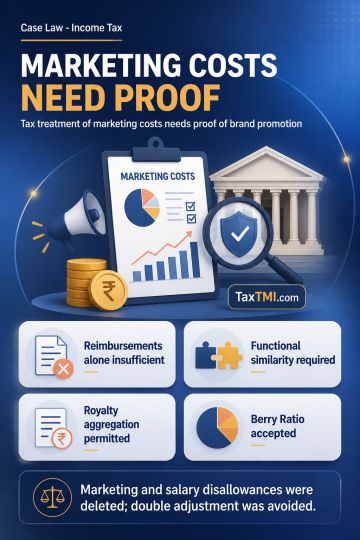
Transfer pricing requires evidence for AMP transactions, functionally reliable comparables, and appropriate aggregation or Berry Ratio benchmarking me...
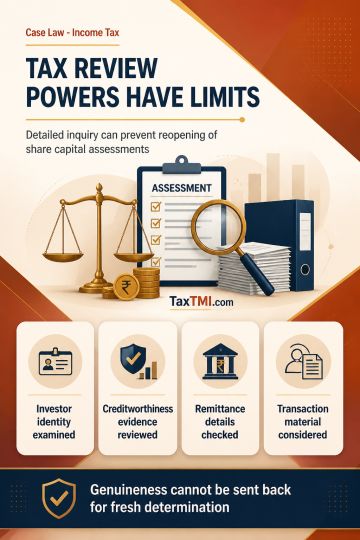
Revisionary jurisdiction cannot reopen share capital assessments where adequate inquiry supports a permissible view and no independent error is establ...
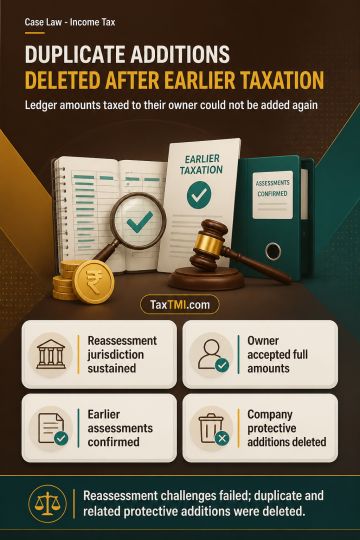
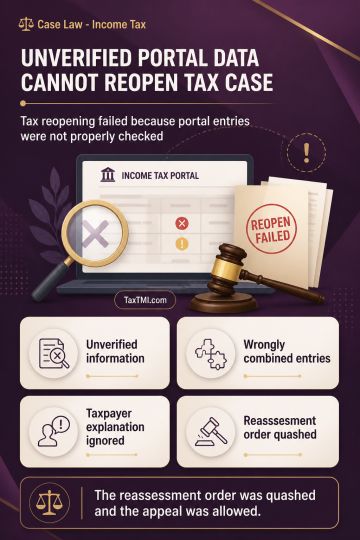
Reassessment jurisdiction fails where unverified portal information is aggregated without examining the taxpayer's explanation or relevance of entries...
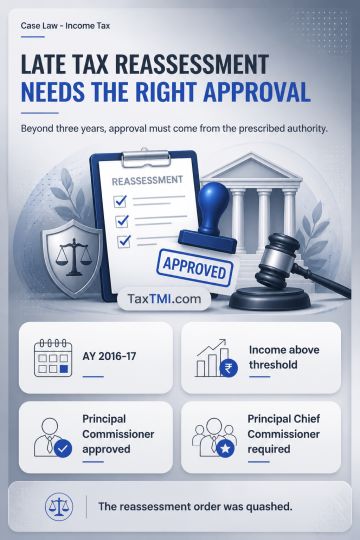
Statutory sanction for delayed reassessment requires approval from the prescribed authority; approval by an inferior authority invalidates jurisdictio...
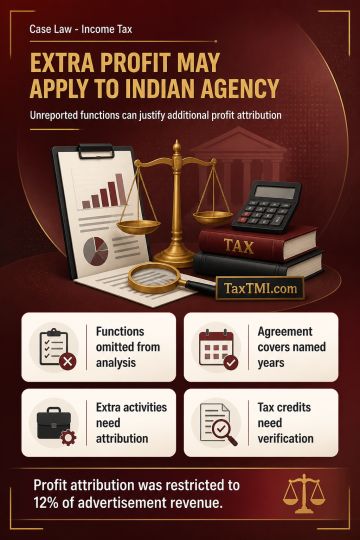
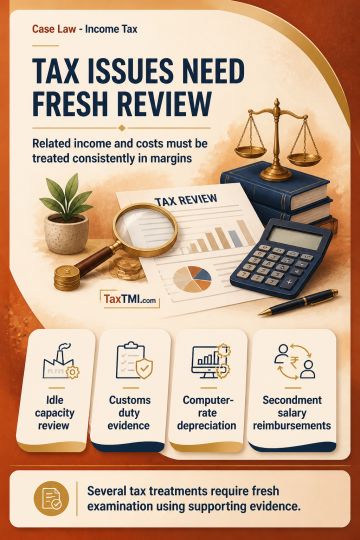
Transfer pricing margin adjustments require matching treatment of non-operating income and related costs, with comparability issues reconsidered on ev...
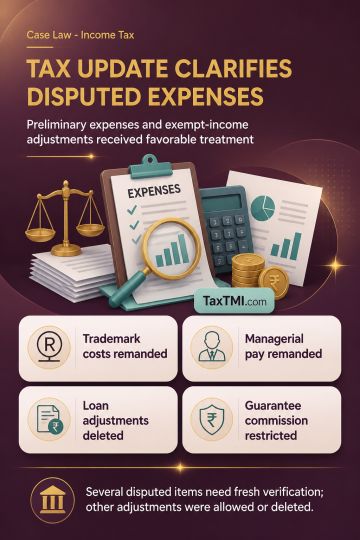
Preliminary-expense amortisation and MAT exempt-income adjustments prevailed, while trademark costs and managerial remuneration require fresh verifica...
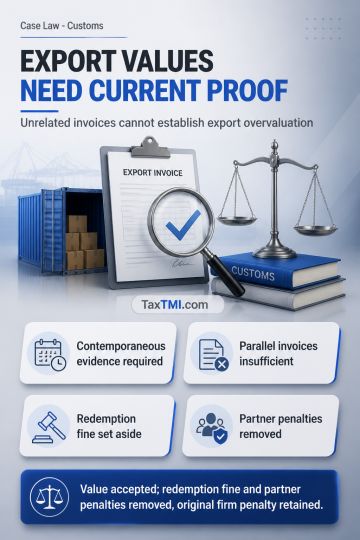
Export valuation requires contemporaneous evidence; unrelated invoices cannot prove overvaluation, and dual penalties on firm and partner are impermis...
HC upheld denial of input tax credit (ITC) under GST law. Petitioners failed to demonstrate actual receipt of goods and legitimacy of transactions with suppliers. Court emphasized that while Section 7's definition of supply is broad, valid ITC claims must satisfy Section 16(2)(b) requirements. Despite petitioners' argument regarding denied cross-examination of suppliers, HC ruled this wasn't a violation of natural justice. Key findings centered on petitioners' failure to maintain proper documentation, including e-way bills for goods valued over Rs.50,000, and inability to prove physical receipt of goods. Per Rule 36 and Section 16(2), burden of proving valid receipt lies with recipient. Without meeting these statutory requirements, provisional credit must be reversed. Petition dismissed.
HC upheld denial of input tax credit (ITC) under GST law. Petitioners failed to demonstrate actual receipt of goods and legitimacy of transactions with suppliers. Court emphasized that while Section 7's definition of supply is broad, valid ITC claims must satisfy Section 16(2)(b) requirements. Despite petitioners' argument regarding denied cross-examination of suppliers, HC ruled this wasn't a violation of natural justice. Key findings centered on petitioners' failure to maintain proper documentation, including e-way bills for goods valued over Rs.50,000, and inability to prove physical receipt of goods. Per Rule 36 and Section 16(2), burden of proving valid receipt lies with recipient. Without meeting these statutory requirements, provisional credit must be reversed. Petition dismissed.
Note: It is a system-generated summary and is for quick reference only.
 TaxTMI
 of 4798




 Join Channel


 TaxTMI
