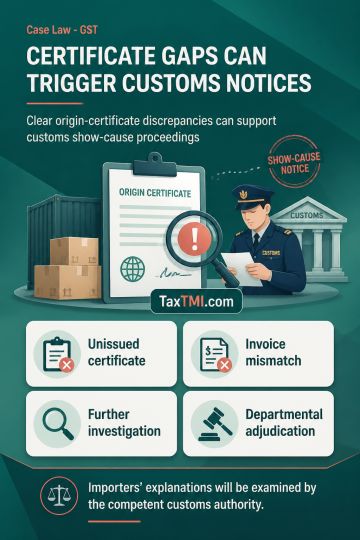
Jurisdictional facts in certificate-of-origin discrepancies can support customs show-cause proceedings, leaving factual explanations for departmental ...
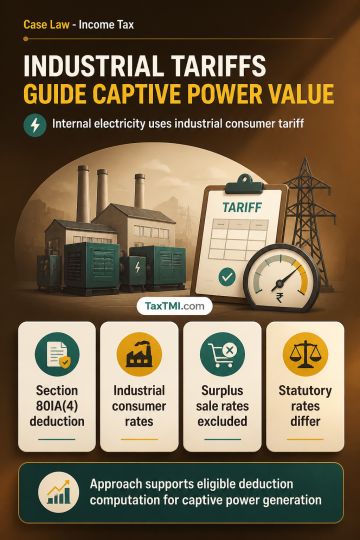
Market value for captive electricity consumption follows industrial consumer tariffs, supporting profit computation for the power generation deduction...
HC upheld denial of input tax credit (ITC) under GST law. Petitioners failed to demonstrate actual receipt of goods and legitimacy of transactions with suppliers. Court emphasized that while Section 7's definition of supply is broad, valid ITC claims must satisfy Section 16(2)(b) requirements. Despite petitioners' argument regarding denied cross-examination of suppliers, HC ruled this wasn't a violation of natural justice. Key findings centered on petitioners' failure to maintain proper documentation, including e-way bills for goods valued over Rs.50,000, and inability to prove physical receipt of goods. Per Rule 36 and Section 16(2), burden of proving valid receipt lies with recipient. Without meeting these statutory requirements, provisional credit must be reversed. Petition dismissed.
HC upheld denial of input tax credit (ITC) under GST law. Petitioners failed to demonstrate actual receipt of goods and legitimacy of transactions with suppliers. Court emphasized that while Section 7's definition of supply is broad, valid ITC claims must satisfy Section 16(2)(b) requirements. Despite petitioners' argument regarding denied cross-examination of suppliers, HC ruled this wasn't a violation of natural justice. Key findings centered on petitioners' failure to maintain proper documentation, including e-way bills for goods valued over Rs.50,000, and inability to prove physical receipt of goods. Per Rule 36 and Section 16(2), burden of proving valid receipt lies with recipient. Without meeting these statutory requirements, provisional credit must be reversed. Petition dismissed.
Note: It is a system-generated summary and is for quick reference only.
 TaxTMI
 of 4805



 Join Channel


 TaxTMI